Villa Vie’s Odyssey Suspends Cambodia Cruise, Leaving 203 Passengers Facing an Uncertain Future
Fuel costs and failed financing brought Villa Vie’s residential cruise to a halt in Cambodia, forcing passengers to leave the Odyssey with no restart guaranteed.
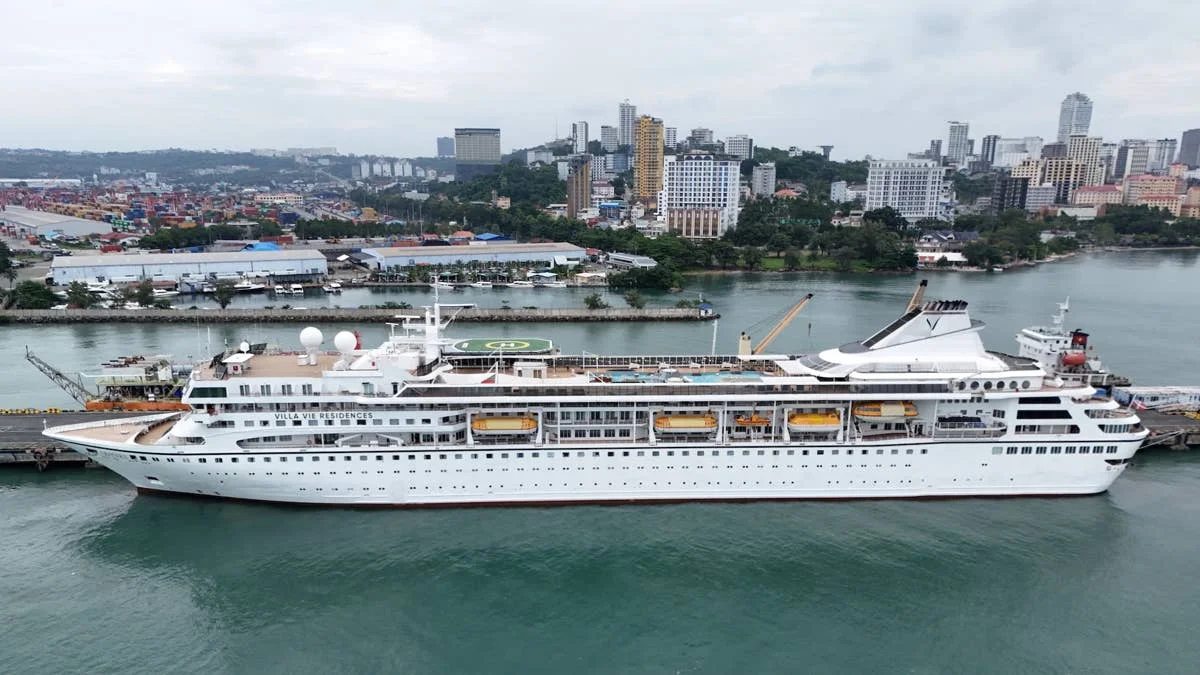
The sharpest blow to Villa Vie Residences’ plan for permanent life at sea came in Sihanoukville: on October 27, the company suspended operations aboard the Odyssey and gave residents roughly eight hours to disembark. The ship had 203 passengers and 156 crew members aboard. For passengers who had sold homes, cars or businesses to join the voyage, the stop was more than a disruption to an itinerary. Their floating home had suddenly become unavailable.
Villa Vie had sold the Odyssey as a way to live aboard a ship circling the globe every three and a half years, with visits to more than 400 ports. Cabins were presented as permanent residences, with amenities including a pool and spa, plus a changing view beyond the ship. Business Insider reported lifetime residence prices from $119,999 to $439,999, in addition to monthly fees.
A voyage that started late and grew more expensive
The voyage had already faced a difficult start. Mechanical repairs delayed its planned departure from Belfast in May 2024 by four months. Preparations cost $15 million more than expected, and the ship eventually set sail that fall. The late start and added expense left the company trying to sustain a long-term operation whose basic costs were already rising.
Fuel became a central pressure point. Villa Vie said monthly fuel costs climbed from about $1,800 per cabin to as much as $8,000 in parts of Asia, following a surge in prices amid conflict involving Iran. That increase put a strain on the business model: the company had to cover the expense of moving a ship across a global itinerary while also deciding how much of the new cost residents could absorb.
“We have been unable to continue carrying the resulting operating losses. Passing the full increase on to residents is not a realistic solution,” the company said in a statement.
Founder Mikael Petterson told Business Insider that the higher costs set off a “cascading effect.” Villa Vie slowed the itinerary and spent longer in port, while seeking investors to help cover the financial gap. A financing deal then fell through, and the company began weighing bankruptcy. Those measures show how a fuel shock can ripple through a cruise operation: slower travel may reduce immediate spending on movement, but it also changes the itinerary residents bought into and does not resolve the underlying funding need.
Residents face the consequences of a business under strain
Some passengers were documenting the deterioration as it unfolded. Lanette Canen and Johan Bodin had sold a business to buy a $100,000 cabin. In a video update, Bodin said, “It seems that this financial situation is much more dire.” His words reflected the gap between the promise of a lasting home and the uncertainty passengers were now confronting.
Related: Watch: Boat Goes Airborne in Big Waves, Throws 3 People into Ocean
Randy Cassingham and his wife, Kit, had sold their Colorado home and car to live on the ship permanently. Cassingham described the abrupt departure in terms of the commitment residents had made: “It’s like buying a house expecting to live there forever and then being kicked out after two years.” That comparison gets to the practical issue at the heart of the suspension. A residential cruise asks customers to place both their housing and daily life in one operation. When that operation stops, residents have to find somewhere else to stay as well as make sense of what they paid for.
Passengers had described earlier signs of strain, including repeated requests for fuel contributions, fewer amenities and uncertainty about the ship’s finances. Even so, many valued the friendships they formed and the places they visited. Those experiences remain part of the voyage, but they do not answer the immediate question of where residents go next or whether the ship will sail again.
What comes next for Villa Vie’s residents
Villa Vie says it is coordinating temporary accommodations while it explores restructuring over the next 60 days. A return to service is not guaranteed. The company’s next steps will determine whether the Odyssey can resume its itinerary and what options residents have after leaving the ship.
The episode also exposes the tension in selling a cabin as a permanent home aboard a vessel that depends on continuous operating funds. Higher fuel costs, a slowed schedule and failed financing left little room for residents to rely on the original promise. For those who sold their homes and businesses, the immediate priority is temporary housing; beyond that, the future of their sea-based homes depends on whether Villa Vie can secure a viable path back to operation.
Related: Watch: 40-Foot Rogue Waves Hammer Cruise Ship in the Drake Passage