BYU’s Defense and Downfield Passing Could Tilt the Utah Matchup
BYU’s defense has the steadier profile, while its downfield passing could expose Utah’s weaknesses and keep the Cougars within reach.
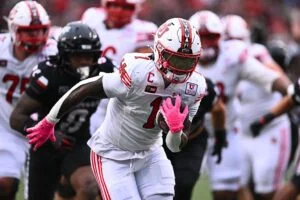
BYU’s defense looks like the most dependable unit in a matchup where both offenses have clear pressure points. That gives the Cougars a path to stay close against Utah, even if running back LJ Martin can’t play or isn’t at full strength. The key could be whether BYU can turn its protection and downfield passing into gains against a Utah defense that has allowed opponents room to attack vertically.
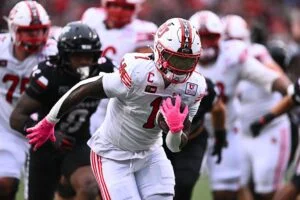
The pick is BYU +4.5 points. Martin’s availability matters, but the case for BYU rests more on its defensive profile and the potential for its passing game to offset a stalled ground attack. Utah has shown it can create explosive plays, yet its performance has been uneven against the kinds of challenges BYU is positioned to present.
BYU’s run game faces its toughest version of the box
BYU’s offense works best when its power running game is productive. The Cougars use both their running backs and quarterback Bear Bachmeier to carry the ball, but the matchup changes sharply if Martin is unavailable. He has been out since early October, returned to practice this week and remains listed as doubtful.
Opponent-adjusted Sports Info Solutions data shows the tension in the matchup. BYU ranks 75th in yards before contact, while Utah ranks 25th in yards before contact allowed. After contact, BYU ranks 11th and Utah 45th. Those strong post-contact results for the Cougars have depended heavily on Martin.
Since Week 5, a span that includes the TCU game in which Martin was injured and had two carries, BYU ranks 81st in opponent-adjusted yards after contact without him. Backups Preston Rex, Sione Moa and Journee Tonga have struggled to keep runs alive through contact. That weakness matters because BYU’s heavy formations invite defenses to crowd the line: Cougars running backs have faced stacked boxes on 58% of their carries, the nation’s 25th-highest rate.

Without Martin, Rex, Moa and Tonga have averaged 2.5 yards per attempt against stacked boxes. Before his injury, Martin averaged 4.7 yards per carry in those situations and 5.6 against stacked boxes in 2025. Utah, coached defensively by Morgan Scalley, stacks the box on 89% of its opponents’ runs, the highest rate in the country. This is the clearest route for the Utes to make BYU’s offense one-dimensional.
Bachmeier has taken on more of the rushing burden, leading BYU with 284 rushing yards, excluding sacks, since Week 5. The Cougars have used read-option plays on 24% of their rushing attempts this season and averaged 6.8 yards per attempt on them. But Utah has limited read-option runs to 2.4 yards per attempt, the fifth-lowest figure nationally. BYU also used the concept just four times against the Utes last year, although Bachmeier did run nine times for 71 yards in that game.
Protection gives BYU a way to attack
If the ground game stalls, BYU has reason to trust Bachmeier as a passer. The Cougars rank fourth in opponent-adjusted pressure rate allowed, while Utah ranks 25th in pressure rate generated. The Utes’ current pass-rush numbers may overstate their usual output: they recorded a 71% pressure rate against Cincinnati last week, but before that game their opponent-adjusted pressure rate ranked 77th. Utah had exceeded an opponent’s average pressure rate only once, against Utah State.
The matchup also presents a chance for BYU to attack deep. Utah has allowed completions of 20 or more yards on 9.6% of attempts, ranking 66th in the FBS. BYU ranks 46th in creating those gains. Outside the red zone, 31% of the Cougars’ passes travel at least 15 yards downfield, the 12th-highest share.

Utah has allowed a 40% completion rate on throws at that depth, ranking 52nd, though the schedule provides limited evidence about how that number will hold against BYU. Houston’s Conner Weigman is the best quarterback the Utes have faced, but Houston attacks downfield less often. Kansas is the other Big 12 opponent in the source’s comparison that regularly pushes the ball deep. Against the Jayhawks, Utah allowed Isaiah Marshall to throw for 333 yards, including an 8-for-13 performance on passes of at least 15 yards. Kansas remained within 27-24 entering the fourth quarter.
That precedent gives BYU a plausible answer if its running backs can’t make progress. Successful deep throws could stretch the defense and compensate for the likely congestion near the line, especially if Martin sits or plays below full strength.
BYU’s defense can challenge Utah’s preferred routes
Utah’s offense has found balance under first-year coordinator Kevin McGiven, who arrived from Utah State after Jason Beck followed Kyle Whittingham to Michigan. McGiven is Utah’s fourth play-caller in three years. His prior power-conference play-calling experience came at Oregon State in 2016 and 2017, when the Beavers fielded two of their worst offenses. The current Utes have been harder to pin down: they sit near the middle of the pack in most play-calling measures, with an unpredictable approach.
The ground game is more identifiable. Utah sends its running backs outside the tackles on 62% of their carries, the 17th-highest rate in the nation. Yet the production is much stronger between the tackles: Utah averages 5.1 yards per attempt outside, ranking 65th, and 8.8 yards per attempt inside, which ranks first by more than two yards.
BYU has held opponents to 3.2 yards per attempt on runs outside the tackles, the ninth-lowest mark nationally. The Cougars’ task is to make contact early. Utah backs Wayshawn Parker and Daniel Bray have gone for zero or negative yards on 56% of carries when contacted at or behind the line of scrimmage, the highest rate in the country.
Getting that initial contact has been difficult. Utah ranks second in opponent-adjusted yards before contact, while BYU ranks 19th in yards before contact allowed. But Utah’s schedule ranks 83rd in strength of schedule per ESPN, which makes those opponent-adjusted figures less conclusive. Against Houston, the only defense in the source’s comparison considered reasonably similar to BYU, Parker and Bray were contacted at or behind the line on 50% of their carries. That offers BYU a practical model for disrupting the run.
The deep ball may decide which offense blinks
Utah’s passing game also relies on throws downfield. Outside the red zone, the Utes send 26% of passes at least 15 yards, above the FBS average of 23%, and complete 49% of them. BYU’s secondary has allowed opponents to complete just 26% of passes at that depth, tied for the fourth-lowest rate nationally.
Utah’s protection becomes a concern when quarterback Devon Dampier holds the ball. On plays where the quarterback keeps it for at least 2.5 seconds, the Utes average 10.0 yards per attempt, according to Pro Football Focus. The same plays have produced four interceptions and 10 sacks. BYU generates pressure on 55% of extended dropbacks, ranking 12th in the FBS, so the Utes’ explosive-play potential carries real risk.
BYU’s upset win over Notre Dame showed how much its defense can disrupt a deep passing plan. CJ Carr completed just 7 of 24 throws of at least 10 yards against the Cougars, a 29% rate; he has completed 58% of those passes against all other opponents.
BYU and Utah have both been inconsistent, but the Cougars appear to have the more trustworthy defense and a passing game capable of punishing Utah’s coverage. Martin’s status could change the offensive balance, yet BYU has enough ways to stay competitive. If the Cougars protect Bachmeier and make Utah earn its throws under pressure, +4.5 gives them room to make this a close rivalry game.