Valkyries-Dream Game 4 Draws Record WNBA Finals Audience of 1.9 Million
Golden State’s Game 4 win averaged 1.9 million viewers, setting a Finals Game 4 record as the series heads to a midday Game 6.
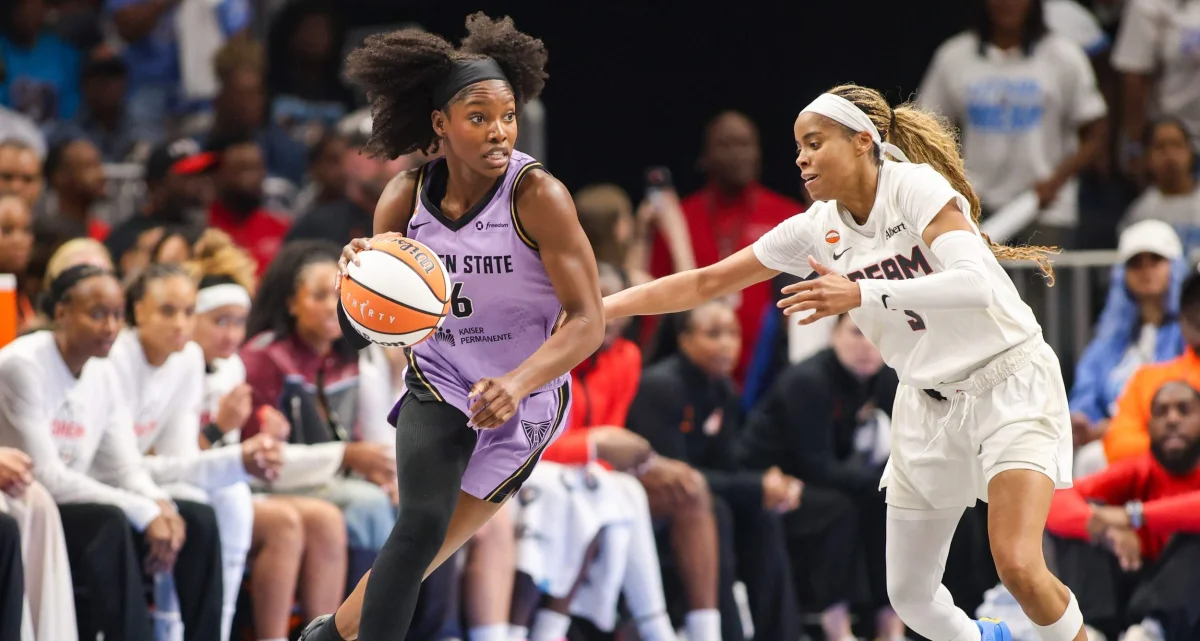
Golden State’s Game 4 win over Atlanta paired a series result with a major audience milestone: an average of 1.9 million viewers watched across NBC and Peacock. That makes it the most-watched Game 4 in WNBA Finals history, topping the 1.67 million who watched the Liberty-Lynx matchup in 2024.
The figure also puts this Finals in a strong position for the league’s postseason audience trend. Three games from the series now rank among the 10 most-watched Finals games on record, while the audience for Monday’s Game 5 has yet to be reported. The result suggests that interest has held through a series whose broadcast windows and venues have required changes.
Reading the audience figures
NBC’s reported 1.9 million is a Total Audience Delivery figure. The network measured Peacock streams using Adobe Analytics, while its television audience data came through a different measurement process. That makes a direct comparison with figures from other networks less straightforward.
Sports Media Watch’s figures put NBC’s television audience for Game 4 at 1.66 million, with another 232,000 attributed to Peacock. Those numbers provide a closer look at how the combined audience was assembled, but the underlying methods still matter when comparing one game or broadcaster with another. The two platform figures add up to just under the headline total, reflecting that the published numbers are not a simple like-for-like count.
Measurement has also shifted across the industry. NBC has recently moved some streaming figures, including for NFL coverage, to Nielsen, but used Adobe for the WNBA Finals. Nielsen’s recent methodology changes have generally lifted reported live-sports audiences compared with earlier data. The record is meaningful within the published figures, but comparisons across years and networks need that context.
NBC’s games lead the series audience
The broadcaster split follows a clear pattern. Games 1 and 4 aired on NBC, and together averaged 1.98 million viewers. Games 2 and 3, shown on USA Network, averaged 1.52 million. The gap is substantial, though not so large that the series’ audience story rests on a single game.
All four games were also available on Peacock, adding a streaming option across the schedule. The remaining games are set for USA Network, with Peacock carrying them as well. Game 4’s record-setting figure therefore gives the series a high point even as the broadcast arrangement changes for the closing stretch.
Golden State’s Game 4 audience was 32% higher than the 1.44 million for last year’s Aces-Mercury Game 4 on ESPN. It ranks eighth among WNBA Finals games by viewership. Those comparisons show the scale of the audience for this matchup while keeping the achievement in perspective: the Game 4 record is specific to that slot in the Finals, and the series already has multiple games among the top 10.
Midday scheduling tests the closing audience
Game 4 was moved from its original 3:30 p.m. ET start to 1 p.m. ET so it could be played at State Farm Arena rather than the Dream’s much smaller home arena. The change did not prevent the game from drawing a record audience for a Finals Game 4.
Thursday’s Game 6 faces a more unusual window. The start time has shifted from primetime to 12:30 p.m. ET, again to allow the game to be held at State Farm Arena. That timing could make it harder for viewers who are working or watching later in the day to tune in live, so the audience will offer a useful measure of how much reach the series can maintain outside an evening slot.
USA Network will carry Game 6, with E! and SyFy simulcasting it. CNBC will not join the simulcast, unlike the other Finals games carried by Versant-owned networks. The added channels widen the television distribution, but they do not erase the challenge posed by a midday start.
Scheduling has shaped the audience opportunity throughout the series: the venue change brought a different start time, while the network lineup varies across games. Even so, the Finals are sustaining seven-figure audiences for much of the postseason schedule. Before the 2024 season, the league had gone 16 years without surpassing that threshold. Game 4 adds a record to that run, and Game 6 will show how the series’ audience responds to one more major change in viewing time.