Jack Draper Warns Tour Demands and Slower Courts Could Put Young Players at Risk
After an injury-hit year, Draper says the long schedule, slower conditions and pressure to climb the rankings are combining to raise injury risks.
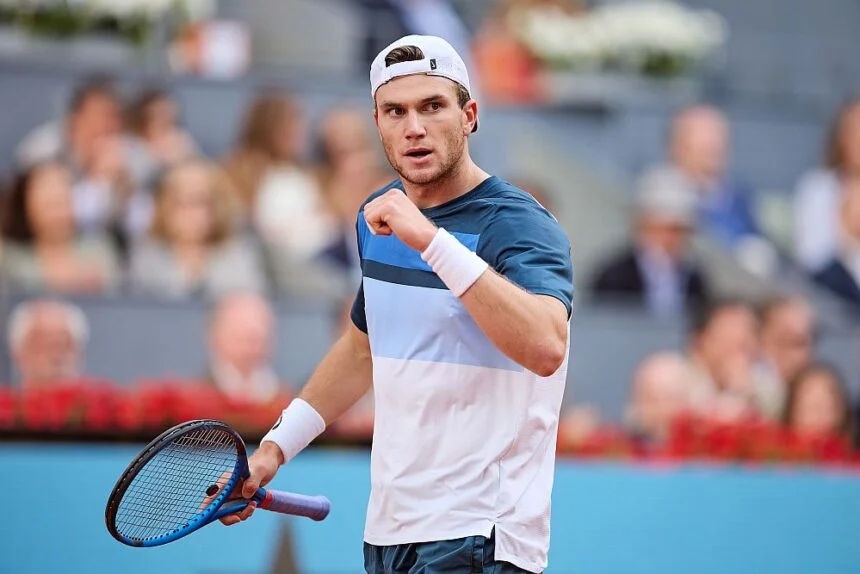
Jack Draper’s injury-hit season has sharpened his concern about the physical cost of modern men’s tennis. The former world No. 4 says a long schedule, slower playing conditions and the pressure on young players to keep climbing the rankings are combining in a way that could put a generation at risk.
His warning carries the weight of recent experience. Draper has played only eight events this year, with a persistent bone bruise in his left serving arm keeping him away from competition since his last match at the Cincinnati Open in August. The injury also forced him to miss all four Grand Slam events in 2026. He has since fallen to 157th in the rankings.
The pressure behind the schedule
Draper says he intends to manage his schedule more carefully in the new season, with longevity a priority. Yet he sees a difficult tension for ambitious young players: advice to skip events can sit uneasily alongside the aim of reaching world No. 1, a goal that can make regular competition feel necessary.
“I’ll definitely look after my schedule as best as possible,” Draper said in an interview with Bagel magazine. He added that he wants “to be playing for a long time,” but described the pressure to play week after week as a consequence of what it takes to reach the top.
That bind is central to his criticism. A player who cuts back may be trying to protect their body, but could also feel they are giving up chances to build form and improve their ranking. Draper’s point is that the decision cannot be understood as a simple matter of personal discipline when players are chasing the same demanding targets within a crowded schedule.
Conditions add another physical test
Draper also connects the injury risk to changes in how tennis is played. He argues that slower courts and slower balls give players more time to reach shots, extending exchanges and asking athletes to keep producing at a high physical level. In his view, that effect is amplified by improvements in athletic preparation and the ability to retrieve difficult balls.
“Athletes are having to push their bodies more and more to cope with the demands of the level that everyone can produce,” he said. When longer rallies meet a long season, the cumulative load becomes part of the problem. Draper’s argument is about the way these factors work together: more demanding points across more weeks leave less room for the body to recover.
He acknowledged that decisions made higher up in tennis have brought positive developments, but said some money-driven choices are putting players in danger. His criticism is pointed, though the source of the concern is broader than any single event or rule: the incentives around the schedule and the physical character of the game are pulling in the same direction.
Other leading players have raised concerns
Draper is not alone in questioning the demands placed on players. Carlos Alcaraz has said the Tour calendar is going “in the wrong direction” and can push players too far to take part in a large number of tournaments. The source also notes that Alcaraz missed nearly five months earlier this season with a wrist injury, while Jannik Sinner has not played since Wimbledon because of a knee problem.
Those cases do not establish a single cause for each player’s absence. They do, however, give context to Draper’s concern: prominent players have spoken about the workload while also dealing with significant time away from competition. His warning is that the combination of schedule pressure and increasingly physical tennis deserves attention before more young careers are disrupted.
A comeback without a confirmed start date
Draper has yet to confirm where he will begin his comeback in 2027. If he returns in January, he will not be eligible to use a protected ranking, which requires players to have been out of action for at least six months. That restriction could shape the ranking position he carries into his return, adding another practical consequence to an injury that has already kept him out for much of the year.
For now, Draper’s immediate task is to return while protecting the long career he says he wants. His comments also leave a wider question for the sport: whether a schedule that rewards constant participation can be reconciled with the recovery time required by increasingly physical tennis. His next start may be uncertain; his view of the underlying strain is not.