Richie Porte’s Hammer, Two Blue Fence Palings and a Brother’s Lasting Place
After Tom’s death, Richie Porte found grief without easy answers—and ways to keep his brother close through family, riding and remembrance.
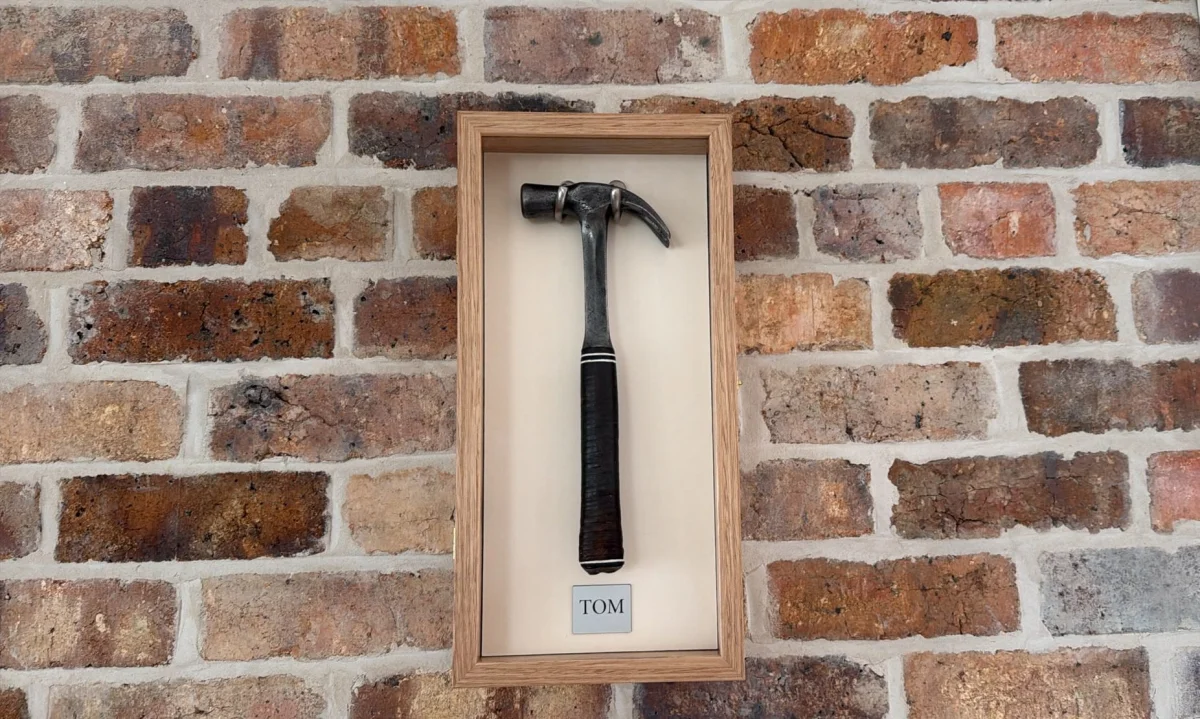
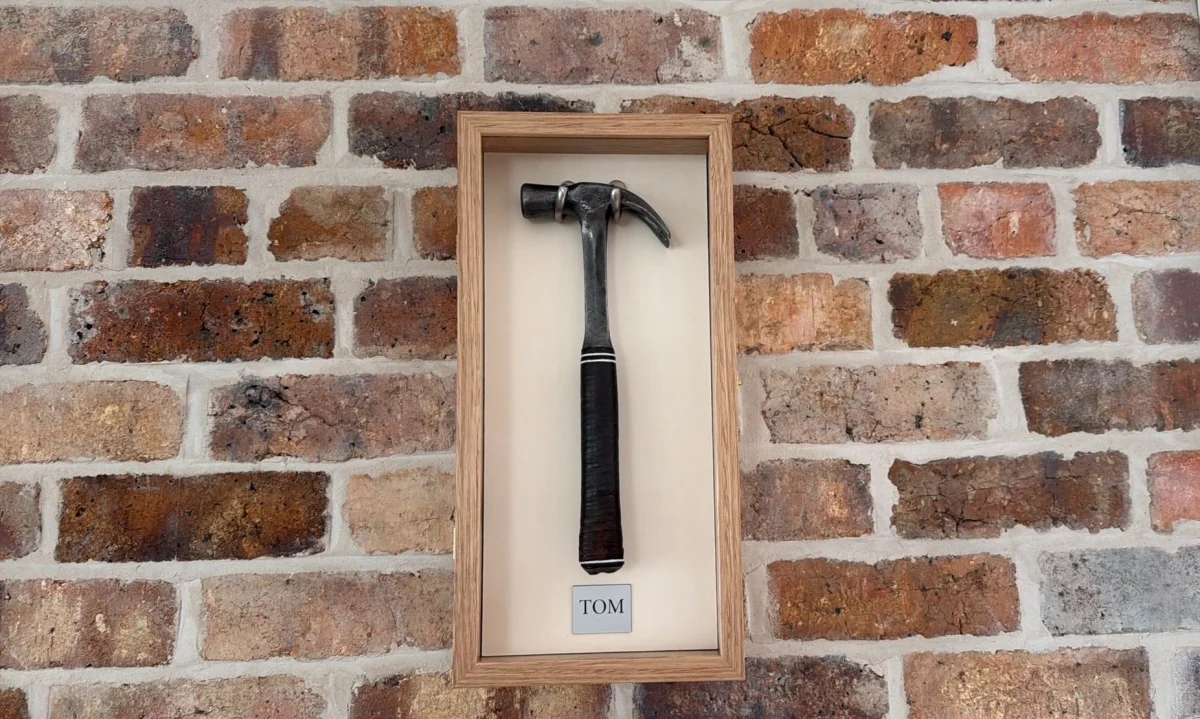
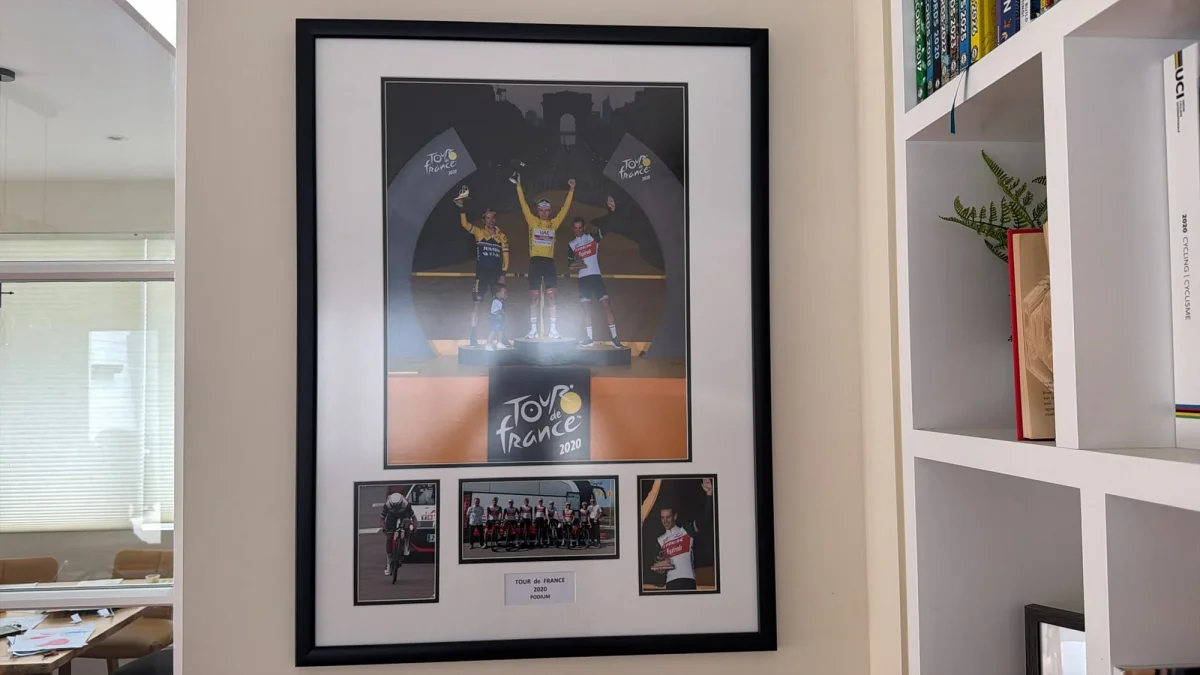
Richie Porte’s Tour de France podium photo once held pride of place in his Launceston home. Now Tom’s worn Estwing hammer hangs there, his name on a plaque beneath it. That change says more about Richie’s life than any result could: after years spent chasing cycling’s biggest prizes, he measures what matters through the brother he lost and the family they shared.
Tom died by suicide at 37, the night after the brothers began building a fence at Richie’s home. Their last day together was full of ordinary work, jokes and care. A year later, Richie still has no explanation for what happened. He has learned to live with that absence, while holding onto the memories that don’t fit neatly around it.
The brother who held the family together
The Porte brothers—Nick, Kieran, Richie and Tom—grew up in northern Tasmania in a swimming family. Their father, Ian, worked as a tradesman. Their mother, Penny, was the one with the words. Tom, the youngest, was initially the smallest. Then, at ten, he shot past Richie in height and became what Richie calls his “big little brother”: the younger sibling who looked out for him.
Three brothers went into the building trades, as an electrician, bricklayer and builder. Tom had little time for the pecking order that can take hold on a job site. If one brother pushed a labourer too hard, Tom would pull him aside and say, “Not on my building site.” He was the family’s voice of reason, even when the argument was between his brothers.
At gatherings, Tom would arrive late because work had run on, ask how everyone was doing and find the person sitting alone. He might leave early because he lived out of town and had to be up at six. He left his thongs by the door, too, so there was always a spare pair at the Porte home. Richie remembers a man who fussed over his own work around other people’s houses, enjoyed a beer and made room for everyone.
“He was the glue of our family,” Richie says. “A knockabout Aussie fella. There’s not many people that would have had a bad word to say about him.”
Richie’s cycling career took him far from Tasmania. Across nearly two decades, he raced for teams including Saxo Bank, Sky, BMC, Trek and Ineos, spending long stretches on the other side of the world from his brothers. He says the distance is hard to convey to people who haven’t lived it: Australian and New Zealand riders can’t drop home as easily as riders from places closer to the European racing calendar.
Even with the miles between them, Richie and Tom stayed in touch every day. A message or call was part of the routine, and Richie says he never hung up wishing they hadn’t spoken. That connection became the centre of a new chapter after Richie retired from racing.
Back on the same job site
In 2019, Tom sent Richie a message about what should come after cycling: “When you retire, just come and labour for me, help me on the building site. You’ll love it. We’ll have so much fun together.” Their longer-term idea was to buy land and properties that needed work, renovate them and sell them.
Richie got two and a half years of working alongside Tom. He was, by his own telling, a novice who could struggle to find the right screw at the hardware shop or choose nails while Tom waited on a roof. Sometimes he returned with coffee when Tom could have used another pair of hands. Tom answered the learning curve with encouragement. He told Richie it would eventually click.
It never fully did. The work mattered for another reason: after 15 years of airports and living out of a suitcase, Richie had his brother beside him each day. Tom spray-painted the foundations and wrote Richie’s name underneath, borrowing the roadside tributes cycling fans paint for riders. He found it funny when people got upset that Richie, a Tour de France third-place finisher, took their Strava segments. At lunch, Tom shared slices of Mars bar he had made at home.
“We lived out of each other’s pockets,” Richie says. “It was the most brilliant time of my life.”
Their last building job was a pair of townhouses. The final task was to attach a sign to the wall. Two days after Tom died, his eldest son, Sonny, and Richie’s son, Luca, put it up together, with Ian lifting Sonny so he could reach. The boys finished their fathers’ final build.
A good day, and the last message
On 18 October 2025, Richie, Tom and their brother Kieran started a fence at Richie’s home in Launceston. Tom brought concrete and gravel for the posts; Kieran helped dig. Richie’s assignment was to space the palings a metre apart so Tom could nail them down in a straight run. Richie didn’t measure carefully, and Tom told him so. The next morning, Richie brought out the tape and measured properly. Tom never came back to finish the job.
Tom had arrived late that Saturday after his trailer came loose on one of Launceston’s busiest streets. It dented his truck and scattered supplies across the road. Only one person had stopped to help. Tom was angry with himself; Richie told him they would sort it out. By the end of the day, Tom was in good spirits.
Security camera footage preserves a small family moment. Richie’s daughter Eloise stubbed her toe and cried over a little blood. Tom solemnly told his four-year-old son, Eddy, that Eloise was badly hurt, needed hospital and would have to have her toe cut off. He was teasing. Later, when Kieran had a crowbar under a concrete slab and Richie’s face was too close, Tom stopped them: “Whoa, whoa, Rich. That’s not safe. Get your face out, you’ll get hurt.”
The brothers also spoke about a young builder in Launceston who had recently died by suicide. Tom said he understood the pressure a young man in the trade could face, but that taking his own life wasn’t the answer. Richie now returns to that conversation because it sits so close to what followed.
That evening, Tom messaged Richie that he had never felt so low. Richie had never received a message like that from him. He asked plainly whether Tom wanted him to drive down. Tom replied that he would be fine, would bounce back as he always did, and they would talk the next day and finish the fence together. Their final messages were at 8:04 p.m. Richie put his phone away and read to his children before bed.
The next morning followed Richie’s familiar routine: a ride with a friend, a Strava segment, coffee and mowing the lawn with his son. He measured the palings to a metre. Near the garage, he wondered why Tom hadn’t arrived yet. Then Penny called at 9:34 a.m.
“My baby’s gone, Rich. Tom’s gone.”
Richie went inside and told his wife, Gemma, that Tom was dead. He collapsed on the floor, crying. Kieran had planned to come over with his tools, so Richie called and asked him simply to come around. A close friend, Heath, who had lost his own brother to suicide 25 years earlier, arrived first. Richie told Kieran in person when he reached the driveway. Kieran punched the wall and broke his hand.
A psychiatrist and close friend, George, was another of the first people through the door. He was devastated too. The house became the place where the family gathered and tried to take in what had happened.
Friends finished the fence
On Monday, the fence remained half-built, with palings across the driveway. Four of Richie’s friends took the day off and completed it. Richie could stay outside with them for about a minute before grief overwhelmed him; he would go back inside while they carried on.
“That’s probably the only good that’s come out of my loss,” he says. “Just to see how kind people are.”
Richie says six other tradies in Launceston died by suicide during the eight days around Tom’s death. The Porte family later met the family of the young builder Tom had discussed. They spoke about their sons and have stayed in contact. The losses made for a bleak stretch, Richie says, but they also brought people together around experiences they had previously carried in separate homes.
Learning to leave the question unanswered
A year on, Richie hasn’t found a reason that makes Tom’s death understandable. He has stopped expecting one. He remembers Tom as someone who protected his family, checked on children and strangers, and had spoken against suicide only hours before his own death. Those memories don’t give him an answer; they make the unanswered question harder to set down.
Richie sometimes wonders whether it mattered that Tom had stopped swimming with him and their brothers. Most evenings, the brothers had swum together. Tom found it dull, but felt better afterward. Richie notices that the routine ended, then accepts that he can’t know what part, if any, it played.
He also replays the final message and wonders whether he missed a chance to help. His oldest brother, Nick, had planned to visit Tom that night. Richie’s answer is that if Tom had said he needed him, Richie would have got in the car. At Tom’s funeral, traffic backed up with people who would have dropped everything if they had known he needed support.
“He just didn’t really give us that,” Richie says. “He assured me. And I trusted Tom implicitly.”
A conversation with George’s wife shifted how Richie thought about the loss. She had lost her mother to motor neurone disease. When Richie said it felt unfair that Tom’s life had ended with so much still ahead, she told him to think of it as illness: Tom had been ill, as her mother had been. Richie says the way she put it helped him.
He’s careful about what he can claim. “If we were talking about cycling, I think I could nail it. But I’m not a mental health expert. I’ve got lived experience, and I guess that’s all I can really say.”
Seven months after Tom died, George sat Richie down because he was worried about him. Richie says he wasn’t at risk of doing what his brother had done, but he needed help. He began taking antidepressants, despite feeling that his good life—his wife, his children and his friends—should have protected him from depression. Gemma, he says, had been carrying much of the weight while he felt empty.
Swimming and riding with friends have helped. He has not returned home from either wishing he had stayed away. They give him time with people and routines that still connect him to his brother.
Carrying Tom into the next day
On the night Tom died, Richie’s son Luca sent his uncle a photo of the puppy the family planned to bring home. Tom suggested the name Neville, and that is what they chose. Richie took Neville on early walks through the hardest part of the year, often crying along the way. In July, the dog was hit by a car after someone left the gate open.
On the anniversary, a friend asked Richie to picture Tom throwing a ball for Neville. It brought a little comfort and a laugh. Richie says both Tom and Neville had plenty of character, and he can imagine them together wherever they might be.
Richie had never been drawn to tattoos. He now has Tom’s initials on his arm, where he can see them while swimming, riding or sitting on a plane. He got the idea from Elke Weylandt, a former colleague at Trek whose brother Wouter died during the 2011 Giro d’Italia, a race Richie was riding. A few weeks after Tom’s death, he asked whether he could copy her tattoo. She said yes.
“He lives on,” Richie says. “I’m going to carry that the rest of my life.”
The fence is now black, except for the last two palings Tom nailed on that Saturday. Richie had them painted blue for the Blue Tree Project, which uses blue-painted dead trees across Australia to prompt conversations about mental health. When he rides past, he thinks of Tom. Some days the memory makes him angry; other days it catches in his throat.
In March, Richie walked with friends for Spoke to a Bloke, a Tasmanian men’s mental health charity. He heard stories from everyone who came, but he doesn’t assume that a public event would have reached Tom. Tom would have preferred to be on a building site than at a mental health breakfast at a hardware store. Richie’s question is how to reach people who would turn such an invitation down. He doesn’t yet know.
On 19 October the following year, Richie spent the day with his family. He rode with friends, swam, did labouring with Gemma and one of his brothers, and had dinner with his parents. He doesn’t call the day of the fence the worst day of his life. It had been a good day, and he won’t let what happened afterward erase that.
“The nineteenth of October this year was nowhere near as bad as [a year earlier],” he says. “It almost feels like a positive step.”
Tom’s hammer hangs above Richie’s lounge room, with his name beneath it. The Tour podium photo remains in another corner. Richie sees his cycling career in a different light now: the race was part of life, but the people who shared it often moved on. Family stays. The hammer and the blue palings hold that truth close to home.
If you or someone you know needs support: in Australia, Lifeline is available 24 hours a day on 13 11 14, and Beyond Blue on 1300 22 4636. In the US and Canada, call or text 988. In the UK and Ireland, Samaritans are on 116 123. In an emergency, call your local emergency number.