Ataja Stephane-Vazquez Runs 51.08 in the 400, Ranks No. 7 All-Time Among High School Girls
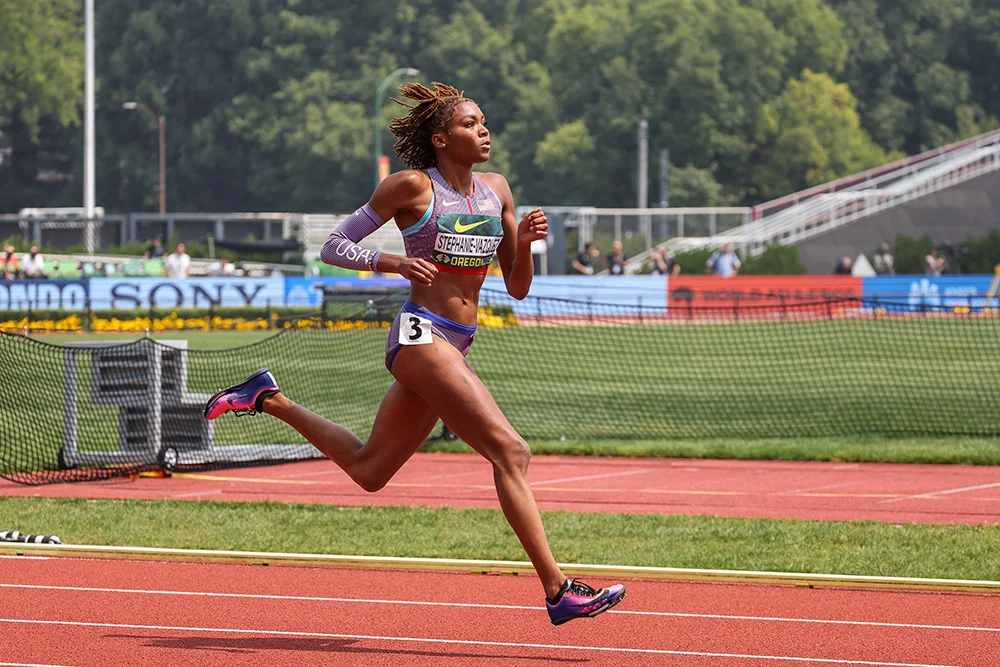
Southeast Guilford’s Ataja Stephane-Vazquez clocked 51.08 in the 400, placing seventh all-time among high school girls.
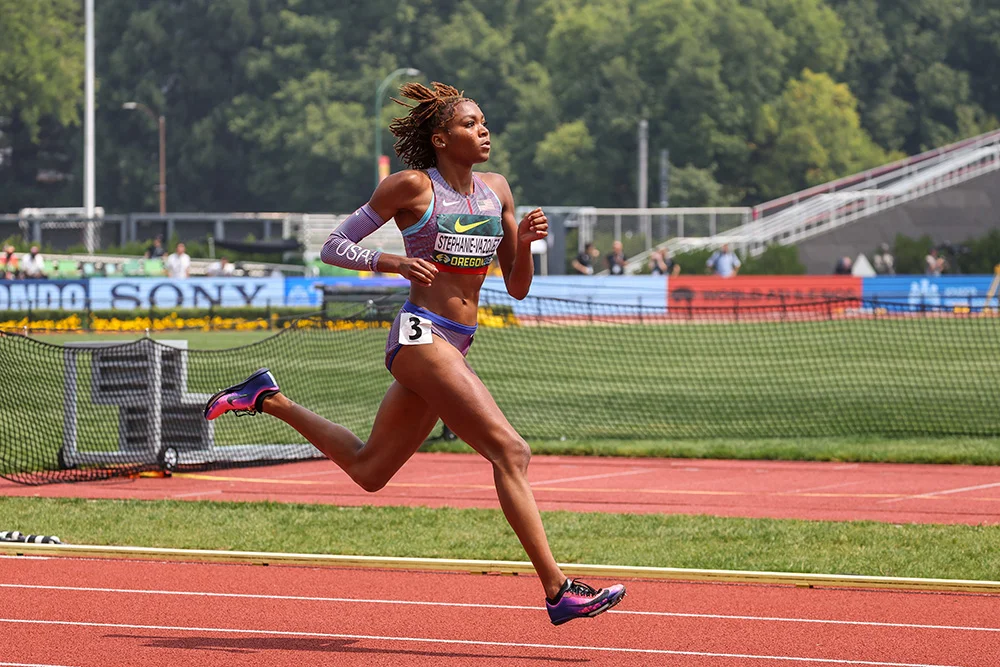
The standout detail is Ataja Stephane-Vazquez’s 51.08 in the 400: the Southeast Guilford runner from Greensboro, North Carolina, now ranks seventh all-time among high school girls. The mark appears in the 2025–26 U.S. season lists, which combine indoor and outdoor performances. That combination makes the ranking a broad snapshot of the season’s recognized performances, while the all-time placement gives the run a separate historical frame. A single result can carry both meanings: it says where an athlete stands now, and how her performance compares with the recorded high school standard.

In the 400, 51.08 is a notable mark because the event asks an athlete to sustain speed across a full lap rather than produce a brief burst. The race rewards acceleration, but it also tests how well a runner manages effort as fatigue accumulates. A fast opening can leave too little for the finish; a cautious start can make up ground difficult to recover. The result is a demanding balance of speed and distribution, with small changes in pace or execution capable of shaping the closing stretch.
How to read the lists
Wind marks without a reported reading are assigned to the wind-aided list; hand times are excluded from sprint events. A plus sign marks a converted result, “i” an indoor mark, and “(A)” an altitude performance above 1,000 metres in affected events. Class symbols identify seventh and eighth graders, freshmen, sophomores and juniors; unmarked athletes are seniors. The indoor-only Top 10s are here.
These labels matter because a ranking is only as useful as the conditions and conventions behind it. Wind can affect some outdoor events, while altitude can change performance in events where thinner air has a bearing. Indoor and outdoor marks also come from different competition settings, so a combined list answers a broad question—what performances appear among the season’s best—rather than describing one uniform racing environment. The symbols give readers a way to see those distinctions instead of treating every entry as interchangeable.

The treatment of timing is another basic check. In sprint events, hand times are excluded, keeping the list focused on electronically timed performances under its stated rules. A converted result signals that a mark has been adjusted for comparison; it isn’t presented as though it were recorded in precisely the same form as every other result. If you’re comparing athletes or seasons, those details help you distinguish the raw performance from the conditions under which it’s listed.
Why the combined ranking carries weight
Combining indoor and outdoor performances broadens the season’s comparison set. It can capture a strong result regardless of which part of the competition calendar produced it, giving readers a fuller view than an outdoor-only table would. But that breadth comes with a trade-off: the list brings together marks made in different settings. The ranking is still informative, though it shouldn’t be mistaken for a direct head-to-head comparison under identical conditions.
Stephane-Vazquez’s seventh-place all-time standing is the headline because it puts 51.08 in a longer historical context. That position doesn’t explain by itself how the race unfolded, what tactical choices shaped it, or how the athlete might perform in a future contest. The source gives a time and a ranking, not a race report. The result deserves attention on its own terms, while claims about what comes next would need evidence beyond this list.

This is more significant than it looks. High school rankings can make a performance legible to readers who don’t follow every meet: a time becomes easier to place when the list shows its seasonal and historical standing. And yet, a rank is a summary, not a full account of athletic development. One mark records what happened on that occasion; it can’t, on its own, tell us how repeatable the performance is or how an athlete’s season will develop.
What the symbols tell the reader
The class markers offer useful context about an athlete’s stage in high school. Seventh and eighth graders, freshmen, sophomores and juniors are identified, while unmarked athletes are seniors. That distinction can help readers understand the age and school-year mix within a list, but it doesn’t change the time itself. A mark remains a mark; the class symbol adds context for interpreting who produced it.
Similarly, the indoor designation helps readers locate the setting behind a performance, while the indoor-only Top 10s provide a narrower comparison. The two views serve different purposes. A combined list is useful for scanning the full season, and an indoor-only list makes it easier to compare results within that part of the calendar. Here's the thing: neither view answers every question a reader might have, but together they make the list’s scope clearer.
(And this is the part most people overlook.) The notation isn’t decoration. It tells you where comparison needs care, which performances have been converted, and which conditions may matter to interpretation. A list without that key would leave readers guessing about how entries relate to one another. With it, the ranking becomes more than a sequence of times: it’s a reference that can be read with some attention to its limits.
What the result means from here
For Southeast Guilford and its supporters, the result offers a clear point of reference: an athlete from Greensboro has posted a time ranked seventh all-time among high school girls. That’s a strong statement of achievement, even without extra claims about records, titles or future outcomes. The available facts are enough to explain why the performance stands out, and restraint matters when the source doesn’t provide a fuller account of the race.
For readers following the season, the next useful question is how the lists develop as more performances are recorded and classified. Rankings are snapshots built from the marks available to them, and their meaning depends on consistent reporting and clear notation. A later entry could affect a position; that possibility is part of how season lists work, not a reason to discount today’s standing. The 51.08 remains the central fact here.
A number this strong invites wider comparison, but the soundest reading begins with what’s actually established: Stephane-Vazquez ran 51.08 in the 400, the performance appears in the 2025–26 U.S. season lists, and it ranks seventh all-time among high school girls. The symbols and list format help explain how that result should be read. A striking time. A consequential place in the rankings. And enough context to see why it matters without pretending the list tells the whole story.