Sandi Morris Finds a New Peak After Louisville Reset and Ultimate Championship Win
After missing the 2024 Olympic team, Morris rebuilt her training and won the inaugural Ultimate Championship. At 34, she believes her best vaulting may still be ahead.
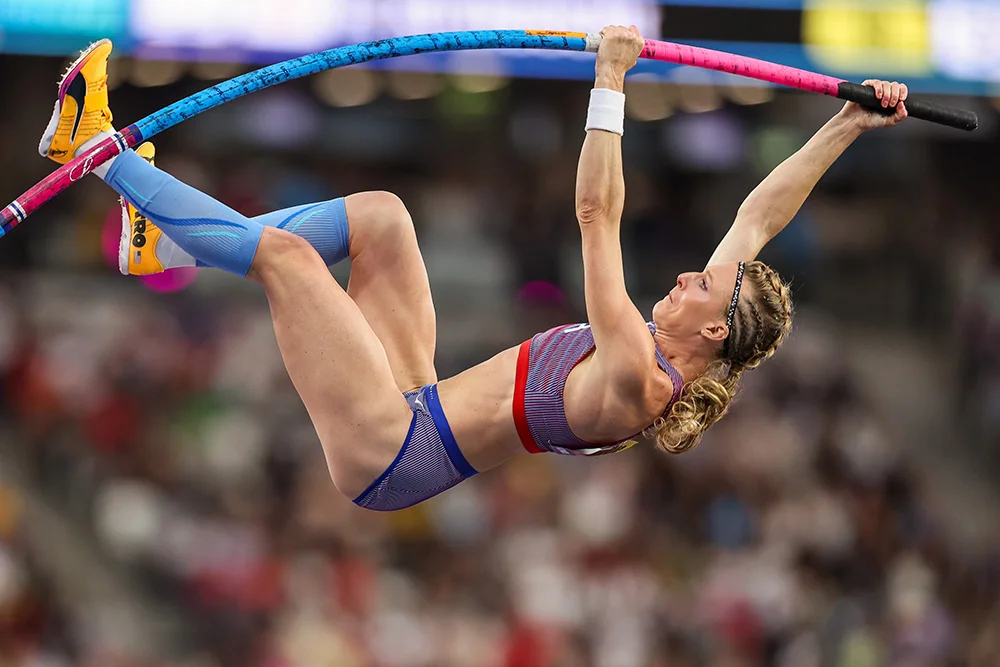
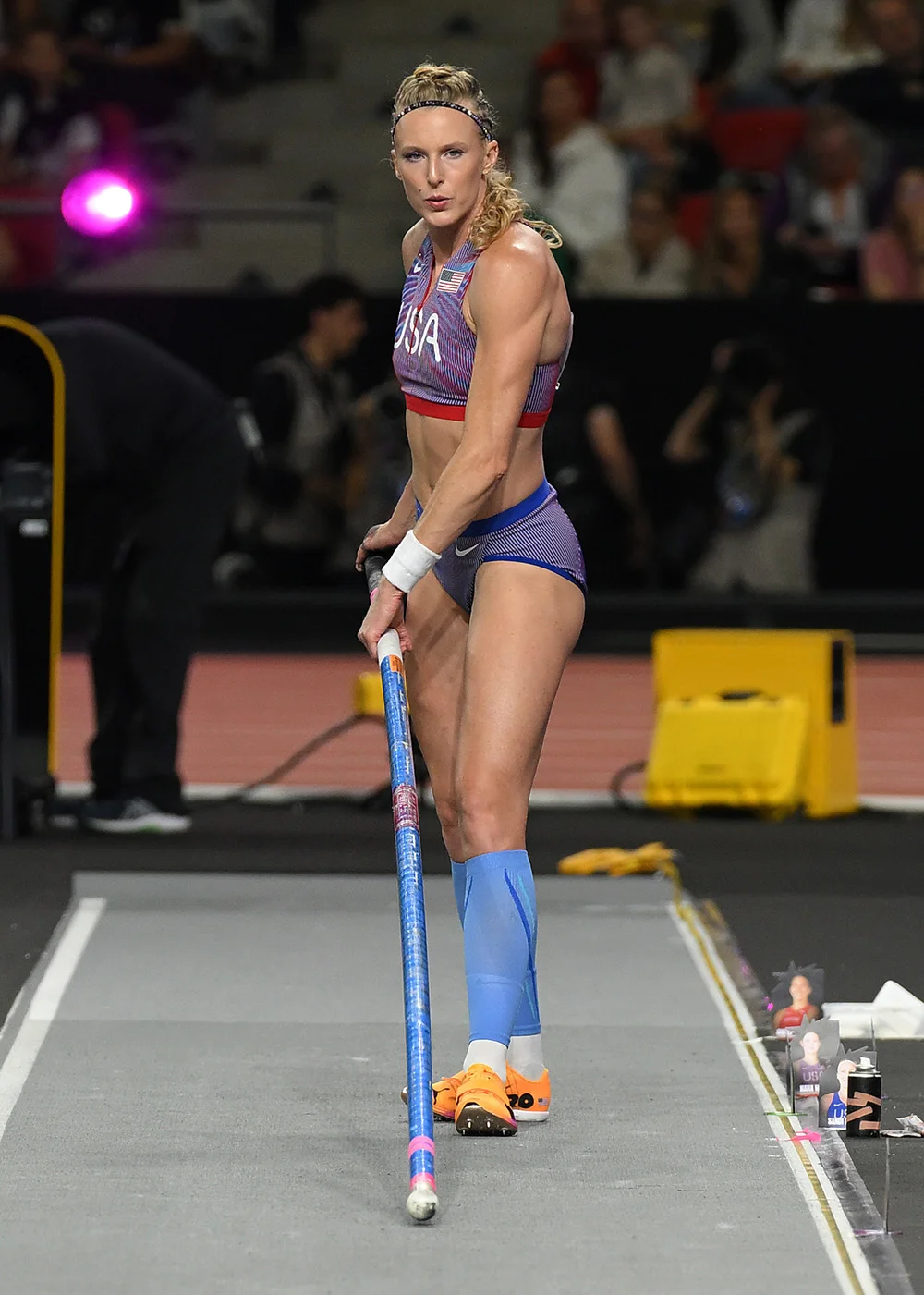
Sandi Morris left Budapest with a title she had chased for years—and a new conviction about what her career can still hold. Her victory at the inaugural Ultimate Championship capped a season in which she also won her sixth USATF outdoor crown, with both results built on her highest vaults in six years. For Morris, the wins are evidence that a deliberate reset can carry an athlete into a new peak well into her 30s.

The reset began after she missed the 2024 Olympic team. Morris reconsidered her training and the people around it, then moved to Louisville to work with coach Brooke Rasnick. She says the change helped her become stronger and faster, sharpen her mental approach and execute more cleanly at a major championship than ever before.
That matters beyond one season. Morris, 34, has been competing among the world’s leading vaulters for more than a decade. She won Olympic silver in 2016 and has since collected world medals and indoor titles, while many of her Rio-era rivals and teammates have retired. Now she’s preparing for 2027, with the Los Angeles Games in her plans and the possibility of continuing beyond them still open.
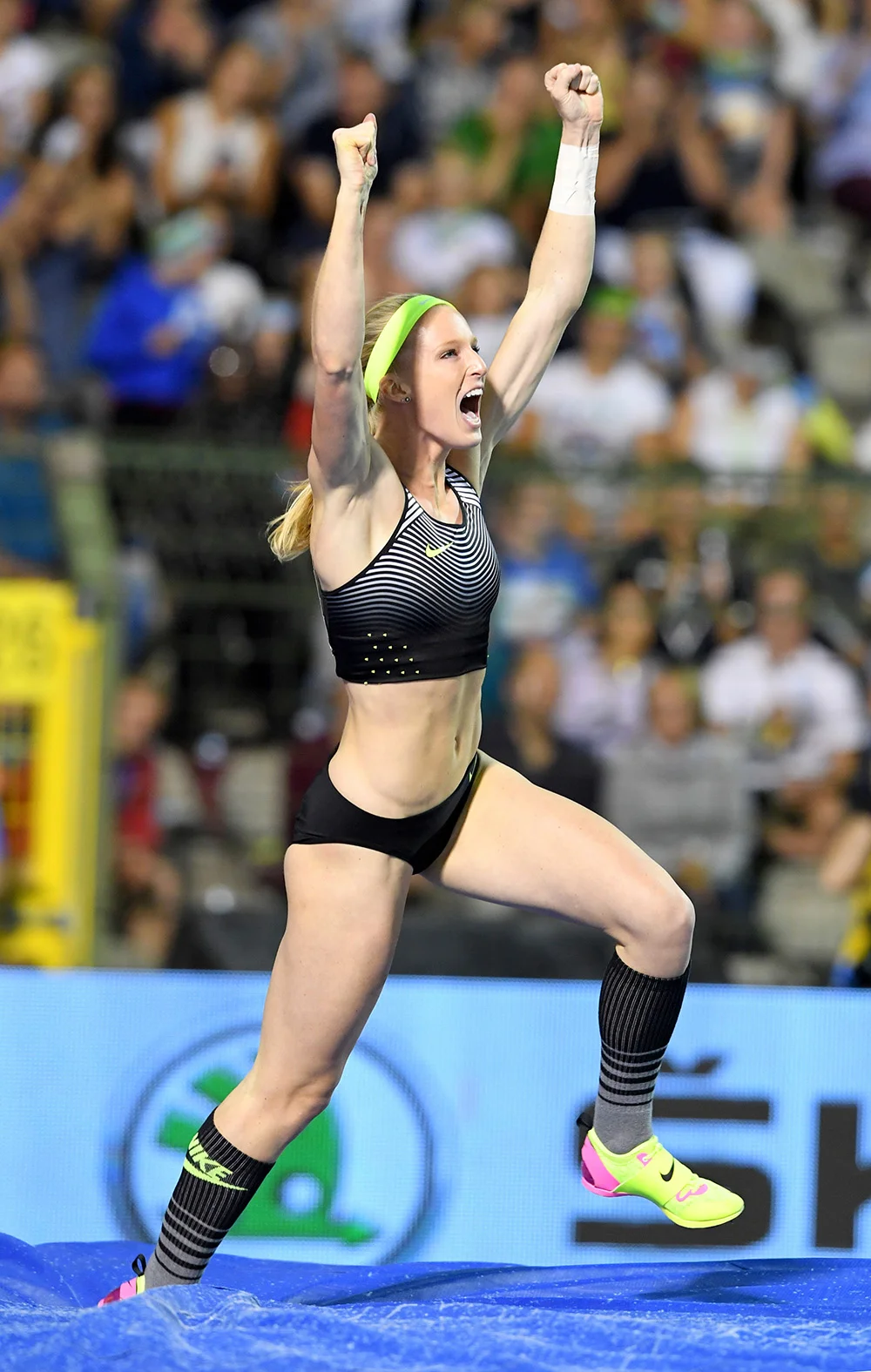
Her ambitions remain specific: she wants to clear 5.00m again, matching her personal record of 16-4¾, set in 2016, and believes she can still pursue the world record. The Budapest win, she says, was not a finish line. It was the start of another chapter.
A championship built on deliberate execution
Morris describes the Ultimate Championship victory as the completion of a long-standing goal. The feeling was surreal, she says, because it came after years of trying to understand what she needed to do to keep improving. Her career has included strong seasons and difficult ones; the challenge was finding a way through plateaus that left her questioning whether she could still get better.
Those questions became more urgent after she missed the 2024 Olympic team. Morris went back to the drawing board, reviewing her coaching, training and support system with the knowledge that her time at the top would not be unlimited. She wanted to be purposeful about what changed, rather than simply add more work.
“There’s intelligent ways to grind and then there’s just grinding for the sake of grinding,” she says. That distinction shaped the overhaul. Morris believes she has now found training methods that suit her and address the parts of her vault that needed attention.
At 34, she feels physically stronger and faster than ever, and says her mental game has reached a new level. In Budapest, the pieces came together under championship pressure. She calls it the best execution she has produced at a championship: each part of her plan was clear, and she followed it from jump to jump.
“Like a laser,” she says, she executed what she had set out to do. The win gave her more than a trophy. It restored confidence in goals she had begun to question, including clearing 5.00m again and challenging the world record. She now believes both remain possible and says she has the tools to pursue them.
Morris is already back home and beginning preparation for 2027. The excitement she feels when discussing the next season is telling: she sees room for more, not merely a chance to defend what she has accomplished. Her account also makes clear that the improvement has come from reassessment, not an assumption that effort alone would solve every problem.
Longevity, one season at a time
As a teenager, Morris cleared a little more than 13 feet. Her 17-year-old self would have been surprised to find her still competing at the highest level at 34, she says. She never ruled out a long career, but she didn’t know how far it would extend. Year by year, she kept improving and kept returning to the runway.
That persistence has taken her through a long record of major meets. She won the NCAA indoor title in 2015, then took silver at the 2016 World Indoor Championships and the Rio Olympics. Her later career brought another World Indoor title in 2018, USATF crowns indoors and outdoors, and two more world championship silvers, in 2017 and 2019.
In 2022, Morris won the World Indoor Championships and the USATF outdoor title, then earned silver at the outdoor world championships. She finished second at USATF in 2023 and 2025, with a seventh-place world championship result in 2023 and a second-place finish in 2025. In the season described here, she added USATF and Ultimate Championship victories.
The record includes setbacks as well as podiums. Morris placed third at the 2021 Olympic Trials and tied for 16th in qualifying at the Tokyo Games. In 2024, she finished fourth at the Olympic Trials after placing second indoors at USATF and fifth at the World Indoor Championships. She has had to move on from both major disappointments and ordinary bad practices.
Her approach is to stay optimistic without pretending that every outcome is guaranteed. She knows a plan may fail, but says that uncertainty is no reason to stop before finding out. The missed Olympic team pushed her to change course; it did not settle what she could still achieve.
Morris expects her current chapter to remain strong through Los Angeles, while leaving herself room to continue beyond that. She is taking the career one season at a time. The distinction matters: she is setting a direction without claiming to know exactly how long her body or motivation will carry her.
She has considered what life after elite vaulting might look like. She misses the hurdles, an event she ran alongside vaulting in high school, and might return to them for fun after retiring. A masters decathlon is another possibility, depending on how she feels. For now, those ideas sit alongside an active training plan, not in place of it.
Confidence beyond the medals
The lesson Morris says she has learned most clearly is to guard against self-doubt. She believes she has long been capable of becoming the vaulter she imagined, but there were seasons when doubt consumed time and energy. Her promise to herself now is not to let it take hold again.
That confidence applies outside sport, too. Morris says she used to fear being bad at new things. Her answer is to accept the awkward beginning and practice anyway. “Embrace the suck,” she says: improvement comes from being willing to start out struggling, then keep working.
That attitude helps explain her interest in music and other pursuits. She plays violin, guitar and keyboard, and is working on songs she hopes to record. She describes music as one of several hobbies rather than a replacement for vaulting. She also grew up riding horses, though frequent travel makes returning to them difficult for now.
Her life away from the runway is busy. Morris recently marked her seventh wedding anniversary with husband Tyrone Smith, a Bermuda Olympian. They still meet at the track for Saturday hill sessions, where they race each other. Smith, who is eight years older, can still outrun and outjump her—and likes to remind her that he has competed at three Olympic Games to her two.
Morris’s answer to the teasing is straightforward: she isn’t done yet. The playful rivalry is part of a shared athletic life, but it also underscores that her next goal remains her own. She is still building toward the career she wants, rather than measuring it only against what she has already won.
She also rejects the idea that her identity rests on the color of her medals. Morris is proud of her silver finishes, but says her two indoor world titles deserve equal recognition. She points to her 4.95m victory in Birmingham in 2018 as some of the best jumping of her life—a difficult title earned against the same leading competitors she faces outdoors.
For her, the meet’s status doesn’t determine whether a performance was great. The quality of the vaulting does. She wants rivals and fans to remember that she fought, showed up and gave her best. Pole vaulting is a major part of her life, she says, but it does not define all of who she is.
Handling the public eye
Elite athletes have to challenge themselves where spectators can see every clearance and every miss. Morris says that exposure can be emotionally difficult, particularly when social media puts strangers’ judgments within easy reach. At points in her career, criticism got under her skin and added to her doubts.
Time has changed how she responds. Morris says experience has taught her to keep her circle small and to remember that online commentary often comes from people who don’t understand the demands of elite sport. Athletes live inside an intense, focused routine; a casual reaction from someone watching on a screen may not reflect that reality.
She can turn criticism into motivation when it suits her, especially when someone doubts what she can do. But she’s also clear that those opinions do not need to guide her. Her focus is on the work and on the people who understand it closely.
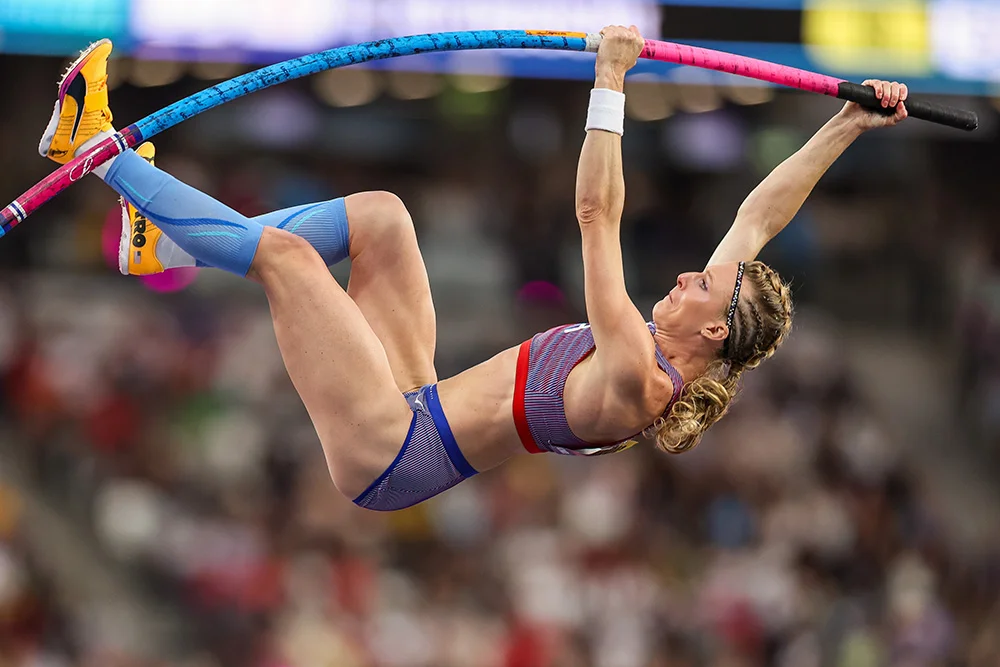
Her visibility is partly intentional. Morris has worn knee socks since high school, initially to protect her left shin from scraping against the pole during the inversion phase of a jump. She grew to like the warmth and compression, and the socks became part of her style alongside a headband.
In a field where athletes can be hard to distinguish from far away—and where several vaulters have blonde hair—Morris wanted a recognizable look. She sees the accessories as a subtle form of self-branding: a practical choice that also makes her memorable. She is comfortable standing out.
Why Louisville fits
Morris credits Rasnick’s coaching group at the University of Louisville with helping her find the right environment. She has worked with several coaches across her career and says Rasnick combines technical knowledge with humility. To Morris, one of Rasnick’s most important strengths is her ability to shape the group’s atmosphere by choosing athletes who will contribute positively to the training culture.
Practice is designed to be engaging, including games that let university athletes compete while supporting one another. Morris values the balance: the group pushes itself, but the energy remains encouraging. The setting has also given her a new role. Younger vaulters look to her for guidance, and she is happy to talk through questions and share what she has learned.
Rasnick’s coaching is tailored to the individual, Morris says. Different athletes need different things, and she has seen Rasnick devote the time to figuring out what each person requires. Morris has received that same care, along with a sense of partnership at championships.
She describes Rasnick as a co-captain for this stage of her career: someone beside her as they make decisions and carry out the plan. The relationship has helped her grow as an athlete and as a person, and Morris says it gives her the support she needs to pursue the final stretch of her career with confidence.
She also recognizes that the frustration of earlier years helped prepare her for this point. Morris is grateful for the person she became while working through those seasons. She doesn’t know whether the same coaching fit or mindset would have worked a decade earlier. What she does know is that the present arrangement has given her a foundation for what she hopes will be the strongest chapter yet.
More space for women’s vaulting
Morris sees growing opportunities for women’s sport as one of the major changes of her career. She points to Athlos meets and to rising attention across track and field and other sports. She is encouraged by women becoming more engaged as fans and by athletes supporting one another.
She also sees the growing spotlight on college sport, along with name, image and likeness arrangements, as part of the change. Her central point is that women’s sport is gaining support and visibility, and she has watched opportunities expand during her time at the top.
In pole vaulting, the depth of participation is particularly visible to her. More young women are clearing 13 and 14 feet, she says, evidence of a larger pool of athletes taking up the event. Morris finds that growth exciting: the next generation is arriving in greater numbers, giving women’s vaulting a broader base and more room to develop.
Her own career offers a long view of what sustained participation can produce. Morris’s personal best is 5.00m, reached at the 2016 Brussels Diamond League. She is now working to return to that height, while the recent wins have made her believe the target is within reach. The evidence she trusts most is what she feels in training and what she executed in Budapest.
Morris’s longevity, by her account, comes down to choice and reinvention. She considered whether her career might be over, but chose to keep going—and to change what wasn’t working instead of repeating it. Her motivation still comes from wanting to be the best she can be.
“Someone’s gonna have to drag me off that track,” she says. After the 2025 season’s breakthroughs and her Ultimate Championship title, that determination has a fresh purpose: Morris is entering 2027 convinced that the next peak is still ahead.
Her life beyond training reflects the same willingness to keep trying things. Morris plays violin, guitar and keyboard, and is writing songs she hopes to record. She shares a home life with Smith and a collection of animals she calls the “Sandi City Zoo”: two Italian greyhounds, a gecko, two birds, a tortoise and three snakes. Horses will have to wait until she is no longer traveling the world for about 100 days a year.
That mix of ambition and playfulness is part of how Morris describes herself. She wants to compete, improve and chase the limits of her event; she also wants room for music, family and experiments that might begin with being bad at something. Her next season will test the vaulting goals. Her larger lesson is that a career can keep changing shape when an athlete is willing to question the routine and choose another way forward.
For Morris, the Ultimate Championship win has answered one question—whether she can still rise to the top at 34—with a clear yes. The next question is how high she can go from here. She’s heading into preparation with renewed belief in 5.00m, the world record and the possibility that this late-career chapter will become her strongest.