Sidy Camara’s Road to Olympic Qualification Runs Through Senegalese Surfing’s Next Chapter
The nine-time national champion’s journey from self-taught surfer to 2028 Olympic hopeful takes center stage in Sama Yone.
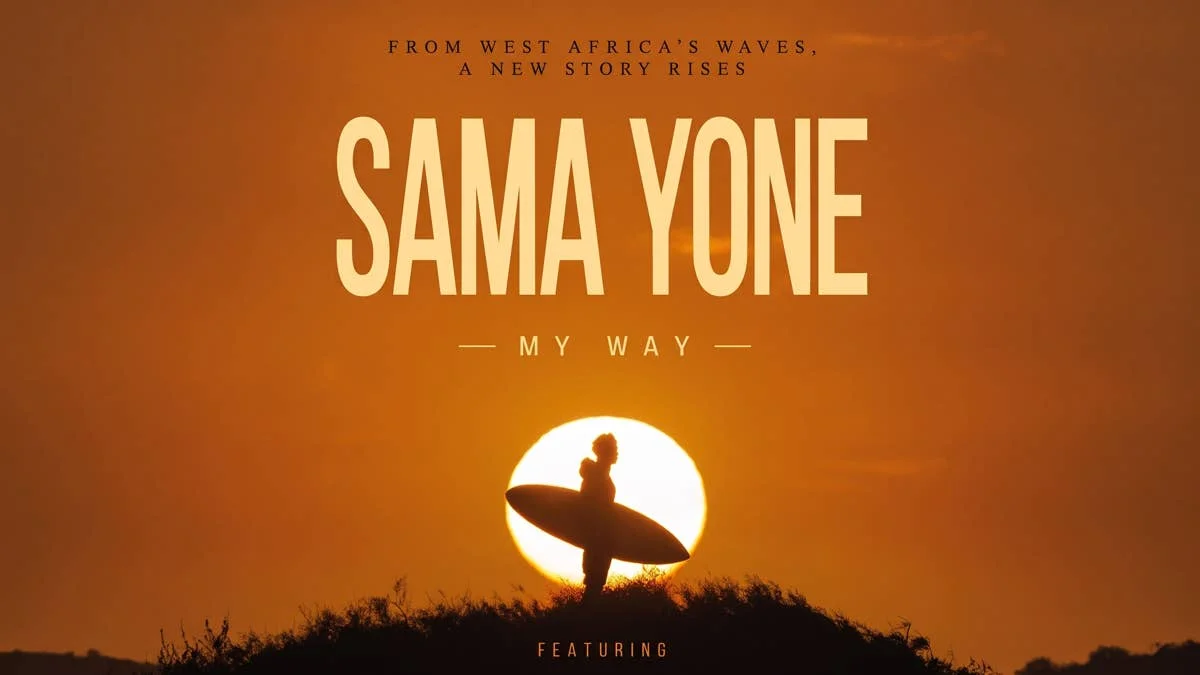
Sidy Camara’s next challenge is bigger than the waves in Sama Yone. The Senegalese champion is chasing a place at the 2028 Los Angeles Olympics, a goal that gives the 22-minute film’s blend of travel, performance and personal portrait a clear competitive edge. His path also reflects a wider shift in how West African surfing is represented: by the people who know its breaks and build its scene.
A demanding wave, and a clear ambition
Directed by French photographer and filmmaker Lisa Coulaud, who has spent six years documenting Senegalese surfing, and co-directed by Josh Fritsch, Sama Yone follows Camara across West Africa in search of a powerful left-hand wave. Camara also produced the film with Coulaud. Its central surf sequence is built around a break that rises from deep water and crashes over a rocky bottom: hollow, fast and unforgiving.
The film presents that wave as both a physical test and a fitting image for Camara’s larger pursuit. He describes the break plainly: “It will humble you, or it will wake you up. But most likely it will humble you.” The line captures the risk in the setting without turning the surf into scenery alone. This is a wave that demands sound judgment as much as commitment, and a rider’s response to it tells the viewer something about how he handles pressure.
Camara’s Olympic ambition gives the film a measure of what comes next. He wants to become the first Senegalese surfer to qualify for the 2028 Games in Los Angeles. That target is specific, but the article offers no qualification results or timetable, so the immediate story is the pursuit itself: an athlete working to take Senegal’s surfing reputation onto a larger stage.
Building a career through persistence
Camara started surfing at 11, with limited access to equipment and little formal support. He largely taught himself. The source describes him as someone who wasn’t immediately singled out for natural talent, making his rise a story of repetition and resolve rather than an early prodigy narrative. He earned his place among the continent’s best through sustained work, and the film frames that progress as unfinished.
That background matters because access shapes how a young surfer can develop. Equipment affects time in the water and the range of skills a rider can practice; learning largely on one’s own puts more weight on persistence and local knowledge. The source doesn’t detail Camara’s training routine or the resources available to him now. What it does establish is that his career began with constraints, and that he kept advancing despite them.
He follows in the footsteps of Cherif Fall, a nine-time Senegalese champion who helped bring the country onto the international surfing stage. The comparison places Camara within a local lineage while making his own objective distinct. Fall’s record shows that Senegal has produced champions; Camara’s Olympic goal would extend that history into a new arena.
A Senegalese point of view
Sama Yone, translated as My Way, premiered at the Board Culture Exposure festival in Biarritz. Its filmmakers set out to tell “a different story about surfing in West Africa,” a region they say is “often portrayed through the eyes of surfers from elsewhere.” Giving Camara a role as producer alongside Coulaud puts him inside the making of that account, not simply in front of the camera.
That perspective links the film to Dakar Dream, a documentary made by Senegalese locals about their own surf scene. In discussion around that film, Camara’s name repeatedly emerged as one of Dakar’s leading surfers. The connection suggests growing interest in Senegalese surfing, while keeping the focus on people from the scene who can describe its talent and challenges themselves.
The film’s 22 minutes combine surfing, exploration and an intimate portrait of an athlete. Its force comes from holding those elements together: the West African journey establishes the scale of the setting, the heavy left tests Camara’s ability, and his Olympic objective points toward the future. At the premiere of SunSong in Encinitas, the writer who met him described a presence that was humble and confident, quiet yet engaging. That impression sits alongside the harder evidence of his story: he began at 11 with limited equipment and worked his way into the continent’s top ranks.
Camara has already helped draw attention to Senegal’s surf talent. The next measure will be whether that hard-earned progress can carry him toward Olympic qualification. For now, Sama Yone makes the stakes visible: a demanding wave, a champion still pushing, and a Senegalese surf story told from within its own community.