Shark Spotted in Fort Pierce Floodwater After Historic Florida Rainfall
A shark moved through flooded Fort Pierce after 4 to 8 inches of rain fell in St. Lucie County, raising questions about how coastal floodwaters connect.
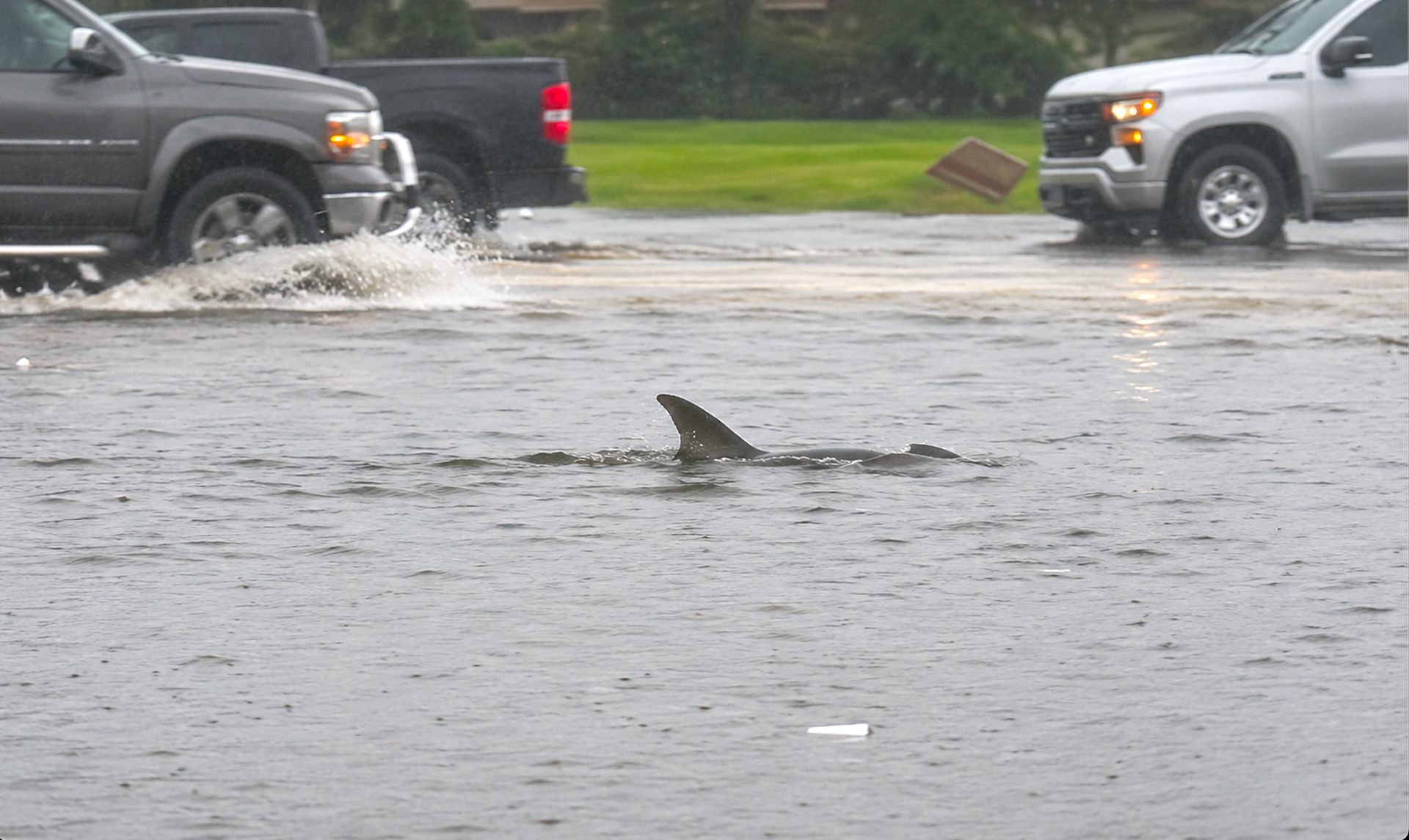
The striking part of the Fort Pierce shark video isn’t just the dorsal fin cutting through a residential street. It’s the route the animal may have taken to get there: from the Atlantic, through local waterways and drainage canals, then into floodwater several miles inland.
The footage surfaced after historic rainfall in November 2026. A resident filmed the animal near the busy intersection of 25th Street and Midway Road, about three to four miles from the Atlantic Ocean. In the clip, a dark fin moves through water that had spread across the street. The resident posted it with a short caption: “Only in Florida. This is 25th street and Midway in Fort Pierce.”
Rainfall across St. Lucie County reached 4 to 8 inches. Floodwater submerged vehicles, and the conditions prompted a local state of emergency. In a scene more associated with a coastal channel than an urban junction, the video appears to show a shark swimming through the inundated street.
A possible path inland
For a shark to reach this intersection from the ocean, it would have needed to pass through the Fort Pierce Inlet and into the Indian River Lagoon, then follow rising water through drainage canals that overflowed into residential streets. The footage doesn’t reveal the animal’s route, but the geography offers a plausible explanation: floodwater can connect places that are usually separated by roads, drainage infrastructure and dry ground.
That connection is the key to understanding the sighting. A shark wouldn’t need to cross several miles of pavement. It would need navigable water linking the coast to the flooded area, with enough depth to move through. The storm supplied the unusual conditions; canals and waterways could have provided the corridor.
Why a bull shark is a leading possibility
The species in the Fort Pierce footage hasn’t been confirmed. A bull shark is considered the most likely candidate because bull sharks are common in this part of Florida and can tolerate both brackish water and fresh water. That ability allows them to move through estuaries and shallow rivers, environments that many other marine predators are less suited to enter.
Still, a likely identification is not the same as a confirmed one. The video offers a brief view of a fin in floodwater, while the animal’s species and exact path remain unknown. The most grounded read is that the sighting fits the habitat and movement patterns associated with bull sharks, while the footage alone doesn’t settle the question.
FOX Weather shared the clip with the question, “WHY DID THE SHARK CROSS THE ROAD?” The post identified the location as Fort Pierce, Florida, and was dated November 5, 2026. Its phrasing captures the surreal image; the water system around the city provides a less mysterious explanation for how a shark might appear there.
WHY DID THE SHARK CROSS THE ROAD?: Drivers in Fort Pierce, Florida were shocked to see what appeared to be a shark swimming through flooded streets in Southern Florida. pic.twitter.com/z68LITWgjD
— FOX Weather (@foxweather) November 5, 2026
When coastal water reaches the street
Fort Pierce sits in a coastal setting where the ocean, inlet, lagoon and drainage network are linked. During intense rainfall, water can rise through those channels and spread beyond their ordinary boundaries. That doesn’t mean sharks routinely swim along neighborhood roads. It means that unusual flooding can bring an animal into places where residents don’t expect to see one.
The scene also underlines how a flood changes the boundaries between land and water. A street normally separates homes and traffic; under deep floodwater, it can become part of a temporary route through the area. For aquatic animals, the familiar map of a neighborhood disappears beneath a continuous surface. What looks like a shark making an impossible urban detour may instead be an animal following connected water into an abnormal setting.
Fort Pierce is about a two-hour drive south of New Smyrna Beach, a surf town widely known as the “shark attack capital of the world.” That reputation reflects the region’s long-running proximity to sharks, but it doesn’t establish the species in this video or suggest that the Fort Pierce animal posed a threat. The clip documents an extraordinary location, not enough detail to infer what happened beyond the frame.
Related: Night Surfing at Snapper Rocks? Controversial Plan Sparks Shark Attack Fears
For residents, the practical takeaway is simple: after major flooding, water on a residential street may connect to nearby canals and waterways, and a clear view of what is beneath the surface can be difficult. The shark’s presence remains a remarkable sighting, with its species unconfirmed. The lasting point is how quickly stormwater can redraw the boundary between Florida’s coast and its streets.