From Hawaiian Olo to the Thruster: How Surfboard Design Changed the Ride
Lighter materials, shorter shapes and new fin setups reshaped surfing, while modern designs now balance performance with sustainability.
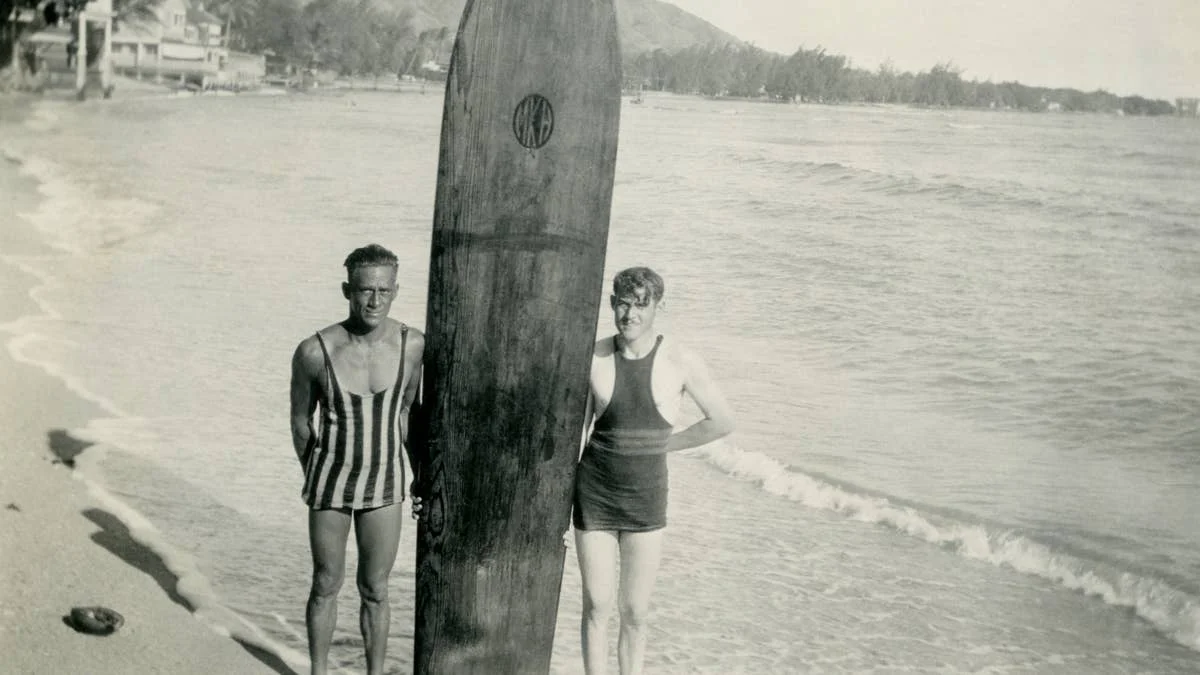
Surfboard design has repeatedly changed what surfers can do on a wave. The biggest shifts came when boards became lighter, shorter and easier to control: each change opened new ways to turn, handle different conditions and push performance. Today, that long history of experimentation is meeting a fresh concern for materials and sustainability.
Heavy wooden beginnings
Ancient Polynesians are widely regarded as the first surfers, practising he’e nalu on timber boards. Three shapes formed the early range: the olo, the alaia and the kiko’o. More than 16 feet long, the olo was reserved for Hawaiian royalty. The alaia was shorter, while the kiko’o sat between the two in size.
These boards were heavy and had no fins, demanding a feel for how the board moved through the water. Surfing carried spiritual meaning as well as physical challenge. Its precise beginnings are uncertain, and some records place early surfing in ancient China, but Polynesian board forms remained the reference point until the turn of the 20th century.
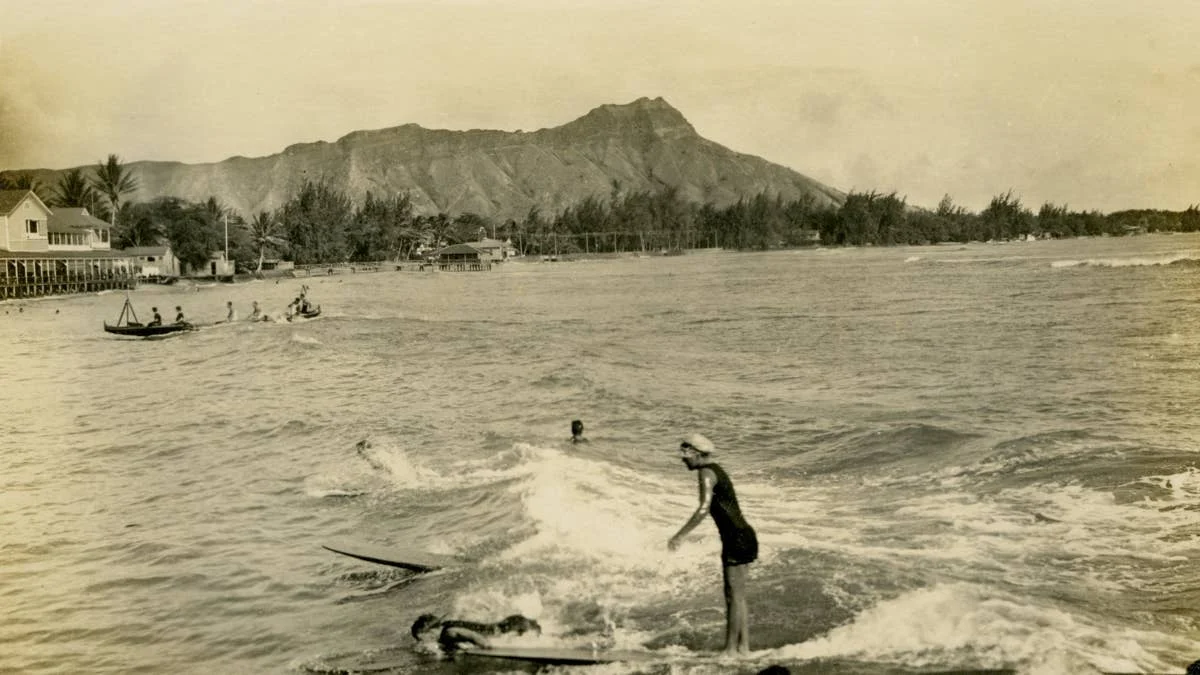
From 1900 to 1930, Hawaiian surfer Duke Kahanamoku helped introduce surfing to new parts of the world. He rode heavy redwood boards, carefully shaped by hand. As interest grew, shapers began testing different lengths, widths and thicknesses, then observing how each design performed in varying conditions. Surfing still reached only scattered pockets of the globe, but board design was becoming a deliberate process of trial and adjustment.
Less weight, more control
Tom Blake’s hollow board, developed between 1929 and 1931, tackled one of surfing’s basic constraints: the weight of solid timber. Known as the “cigar box,” it used an internal wooden frame and ribs, with plywood decks. The construction drew on airplane wing engineering and cut board weight roughly in half. Wood still absorbed water, so Blake added a drain plug to release moisture.
In 1935, he fitted a speedboat fin to the board’s underside. That addition made a marked difference to turning and helped establish the fin as a tool for controlling a board’s direction. Blake’s innovations changed both how surfboards were built and how they could move.

The next major leap came in the 1950s with the Malibu-style longboard. Lighter balsa wood and fiberglass construction made boards more accessible, while polyurethane blanks replaced hollow wooden designs. Polyester resin added strength and helped keep water out. Easier shaping accelerated experimentation with fin templates and placement, giving surfers and shapers more room to tune a board’s feel. Surf culture expanded rapidly, especially in Australia and California, as other regions began catching up.
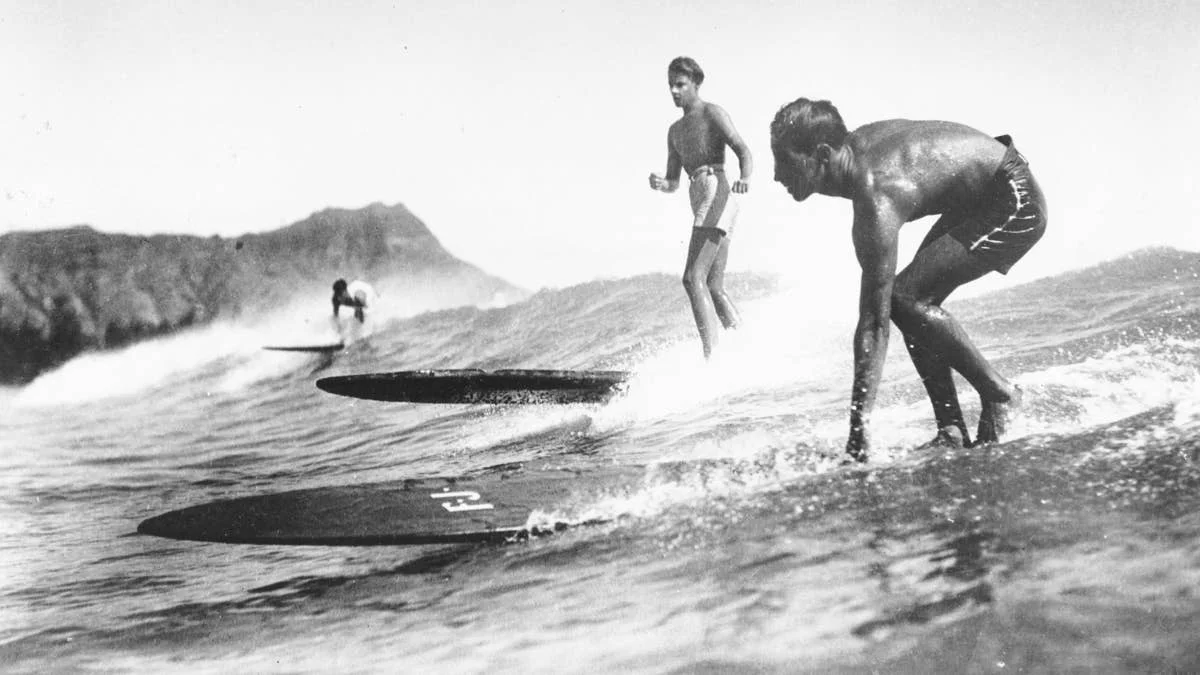
Related: How To Surf a Twin Fin With Josh Kerr
Shorter boards change the turns
The experiments of the 1950s led to a question that redrew the boundaries of board design: what if a surfboard were much shorter? During the 1960s, boards shrank from more than 10 feet to seven feet and sometimes six. The shorter outline allowed tighter turns and gave surfers new options in critical, performance-oriented waves. Ideas that now underpin modern shaping took hold during this period.
California’s George Greenough helped spark the shift through his unusually short kneeboards. Bob McTavish carried that approach into stand-up surfing, translating Greenough’s ideas into shorter boards by cutting away length from the traditional longboard form.
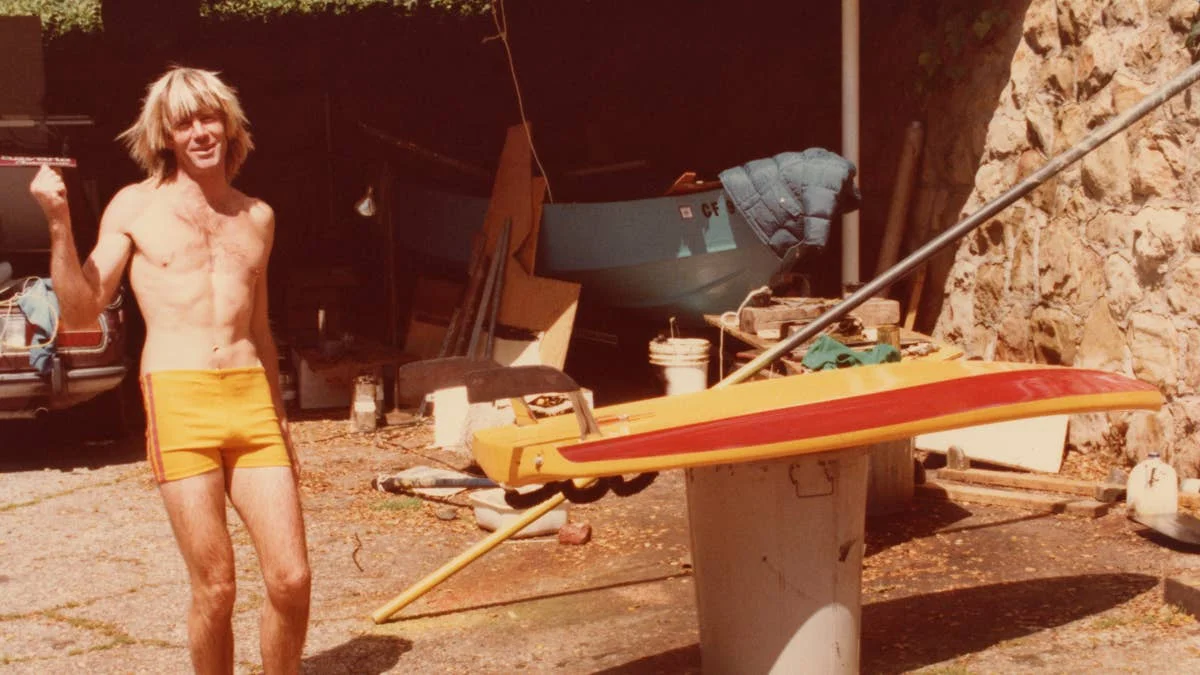
Fin design brought another major change. Tom Blake had experimented with twin fins in the 1940s, but Mark Richards’ version, developed in 1976, brought the setup into wider use. Richards saw a weakness in the single fins then popular: they struggled in smaller surf. His twin fin offered more manoeuvrability and suited those conditions, though it wasn’t designed for larger waves. Twin fins remain a distinct option for surfers seeking a looser, more responsive ride.

The thruster becomes the performance standard
Simon Anderson’s thruster setup arrived in 1981: two side fins paired with a centre fin. The combination gave surfers more drive and confidence, supporting a more powerful, progressive style. It also brought rocker into sharper focus, as shapers worked to help boards enter steeper waves earlier. Competitive surfing moved into a faster, more technical phase. Shapes and materials have changed since, but the thruster remains at the heart of performance surfing.
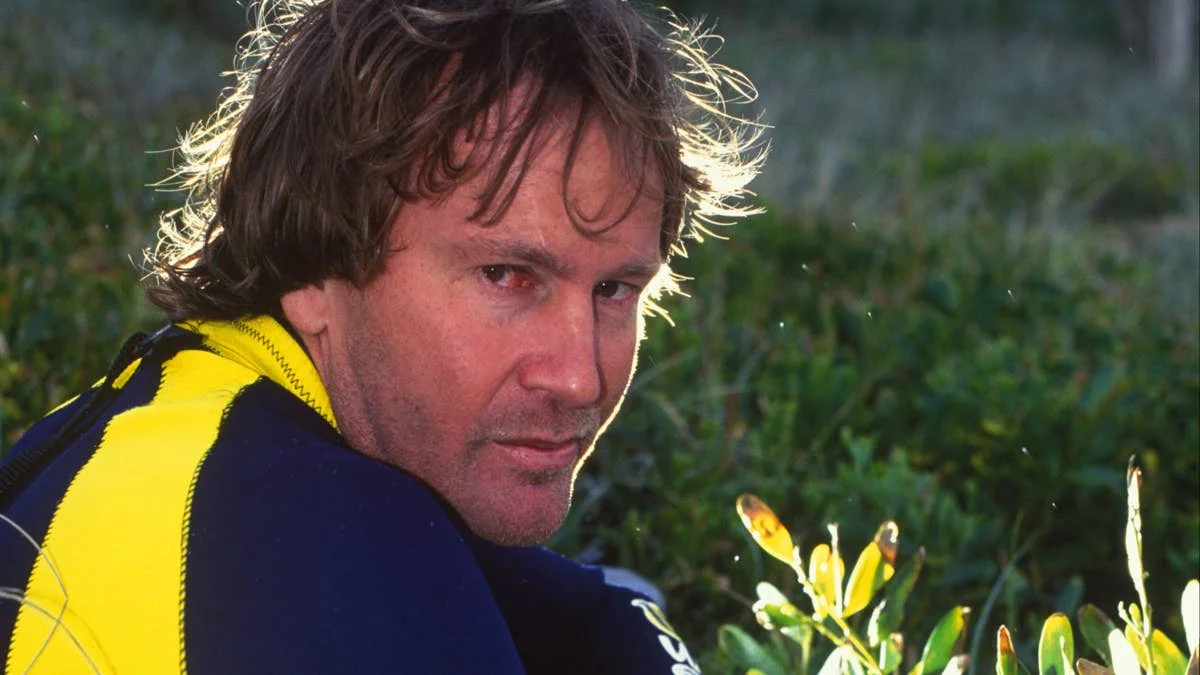
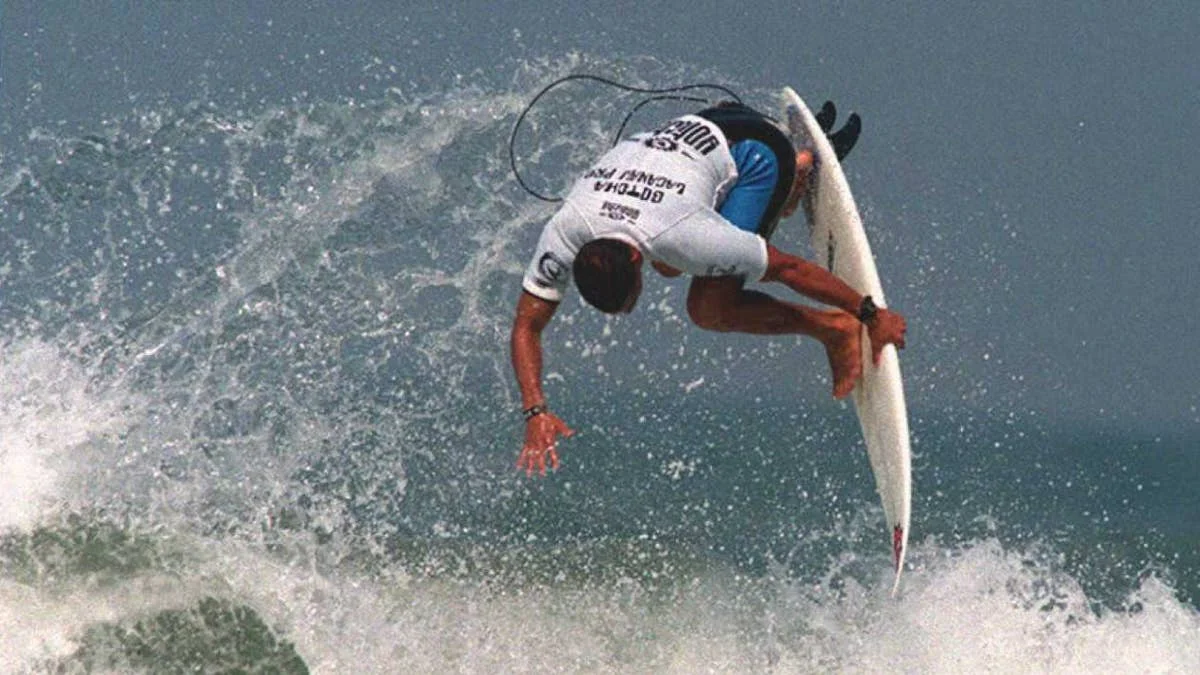
By the 1990s, shorter, thinner boards had become standard, and shapers kept refining tails, rail thickness and concaves. Computer-assisted shaping brought greater precision and made production at scale possible. Kelly Slater’s surfing in France in 1995 captured how deeply high-performance surfing had taken root.
More choice, new materials
In the 2000s, some surfers tired of narrow, highly rockered boards and looked for shapes that worked better in weaker surf. Fish, retro outlines and other older designs returned with modern materials and construction. Wider boards became common, and volume gained importance when choosing a board. Many surfers began building quivers for different conditions. EPS foam and epoxy resin also became more widely used, while hybrid designs occupied the space between a fish and a performance board.
During the 2010s, computer-aided design became standard worldwide, enabling precise profiles and large-scale production. Grovellers gained popularity as surfers sought performance in weaker waves. Carbon fibre offered new ways to tune flex and improve durability. Channel Islands, or CI, developed its Spine-Tek construction, a precision-engineered stringer running down the board’s centre, alongside carbon patches in the tail intended to improve durability.
Today, sustainability is shaping new material choices. Boards made with bio-resins and blanks from bio-polyester, including Polyola, are gaining market share. The mid-length has also returned, often paired with a pin tail and twin fins; that combination can offer a more forgiving ride in larger, more powerful waves with open faces.
The next stage of surfboard design remains uncertain. The direction is clearer: shapers are still balancing control, speed and suitability across conditions, while looking for ways to reduce the materials’ impact. The board’s history suggests that progress will come from practical changes surfers can feel under their feet.