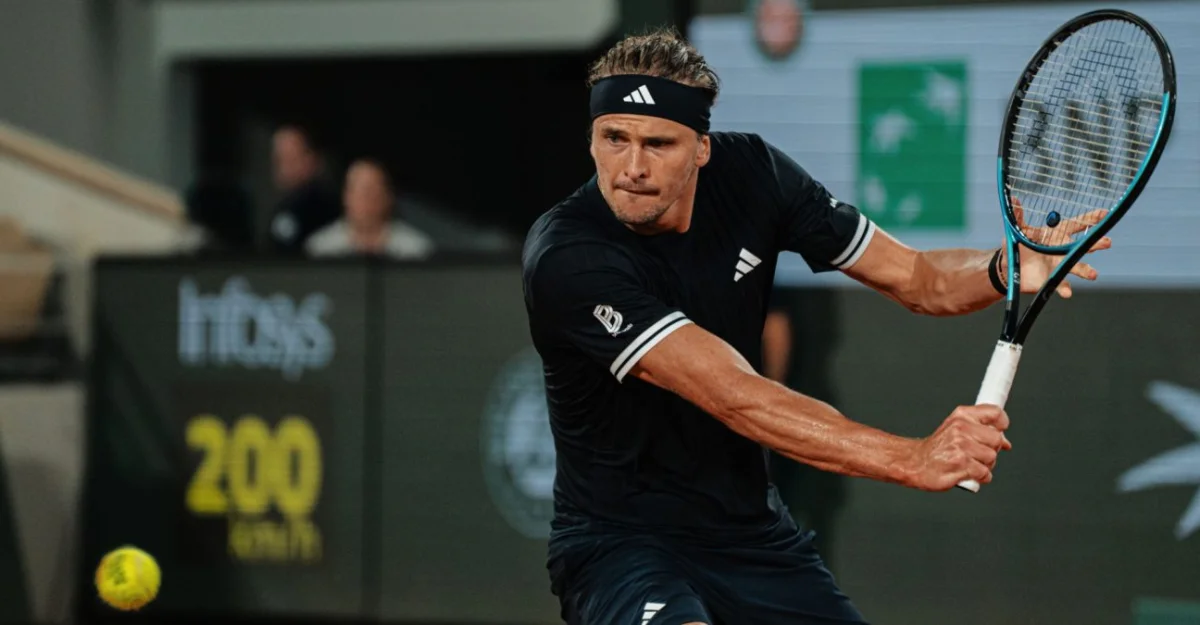
Mouratoglou backs Zverev’s No. 1 season: fitness and Grand Slam nerve made the difference
Mouratoglou says Zverev earned No. 1 through durability and two major wins that answered questions about his mental strength.

Alexander Zverev’s claim to the year-end No. 1 spot rests on more than the openings created by Jannik Sinner’s absence and Carlos Alcaraz’s missed chances. Patrick Mouratoglou argues that staying available to compete is part of a player’s value, and that Zverev’s two Grand Slam titles showed a mental strength that had long been questioned.

“Zverev might not be the best player, but he’s the number one in the world, and he fully deserves it,” Mouratoglou said in a video on social media. His distinction is direct: judgments about who has the highest ceiling are separate from the season’s ranking, which reflects who accumulated the results. “Your ranking is your value,” he said. “If others are injured, bad luck for them.”
Availability counts in the standings
Zverev is assured of ending 2026 at No. 1 after Sinner withdrew from the rest of the season. He leads the ATP Tour with 62 match wins, and he won Roland-Garros and the US Open. His Paris victory made him the first German man to win the title in the Open Era. Sinner was out for the season, while Alcaraz missed both tournaments.

Those circumstances shape the debate, but they don’t erase what Zverev did with the opportunities in front of him. Mouratoglou’s case is that a season ranking measures the complete job: producing results while managing the body well enough to keep showing up. “A player is not only performing on court, it’s also being healthy, it’s also managing your body, so it’s part of it,” he said.
That view treats durability as an element of performance rather than an unrelated bonus. A player who can’t sustain a high level of participation has fewer chances to build a season-long record. Mouratoglou put the point plainly: if one player avoids injuries while rivals regularly miss time, the available player is more likely to finish higher.

He used Jack Draper as an example, describing him as an “amazing player” whose injuries make it difficult to maintain his ranking. Mouratoglou also invoked Rafael Nadal, rejecting the hypothetical that Nadal would have won a certain number of additional majors if injuries had not intervened. “There is no if. He was injured,” he said. He contrasted that with Novak Djokovic, whom he described as barely injured across his career.
The work behind a fit season
Mouratoglou’s argument goes beyond the luck of avoiding a setback. He described staying healthy as a skill built through sustained choices: careful eating, daily physiotherapy, discipline and sacrifice. In his telling, those routines are part of the competitive work that makes a long season possible. “There is a price to pay for everything,” he said.

That framing gives Zverev’s 62 wins added weight. The number reflects not just match outcomes, but the ability to remain present through enough of the schedule to lead the Tour. It doesn’t settle every debate about the best player, and Mouratoglou doesn’t claim that it does. He said Sinner and Alcaraz are better players than Zverev, then underscored the gap between that assessment and the standings: “Yes, but they’re not number one. He’s number one.”
He made a point of separating Sinner’s season-ending absence from any judgment about the Italian’s professionalism. Mouratoglou called the situation sad for Sinner, whom he considers serious and disciplined, and said he expects Sinner to finish No. 1 many times in the future. For this season, however, the missed matches change what Sinner can achieve in the standings.

Two titles changed the story around Zverev
The titles also answered a different question: could Zverev close out a major when the draw gave him a genuine opening? At both Roland-Garros and the US Open, Sinner and Alcaraz were out of the draw, leaving Zverev as the favorite. Mouratoglou called the circumstances “maybe a once in a lifetime occasion.”
That setup invited scrutiny because Zverev had previously had several chances to win a Grand Slam without finishing the job. Mouratoglou said those near-misses had fed doubts about whether Zverev could handle the pressure. This time, Zverev won twice. Mouratoglou acknowledged that Zverev didn’t play well, but stressed that he still navigated the tournament and took the title. For him, that’s evidence of a major competitive quality: staying mentally strong enough to win without needing everything to feel perfect.

The season therefore gives Zverev two kinds of proof. His Tour-leading win total and year-end position reflect consistency and availability; his two majors show that he could turn favorable draws into titles when the stakes were highest. The absences of Sinner and Alcaraz are part of the context, but they don’t make Zverev’s wins hypothetical. Mouratoglou’s read is that the No. 1 ranking belongs to the player who delivered across the season—and that Zverev’s major victories have changed the case for his nerve.
The next test is whether Zverev can carry that evidence into future seasons when his leading rivals are present. For now, Mouratoglou’s standard is clear: ranking follows the results a player actually records, and staying fit enough to record them is part of the achievement.
Related coverage: Davidovich Fokina topples Zverev to reach the Shanghai final; Zverev reflects on becoming No. 1; Zverev set for year-end No. 1 after Sinner’s withdrawal.
Further reading: Zverev escapes the list of top Open Era players without a major; Sinner and Zverev meet in the Wimbledon final; Zverev discusses Sinner’s standing among the best.